Start here: altitude gap
The first thing you notice isn’t the monasteries—it’s how normal tasks suddenly feel “expensive.” In Lhasa (around 3,650m), a short set of stairs can spike your heart rate, and that changes what a “full day” realistically looks like. If you land and try to muscle through a packed schedule, you’ll spend the next two days paying it back with a headache, poor sleep, and zero appetite.
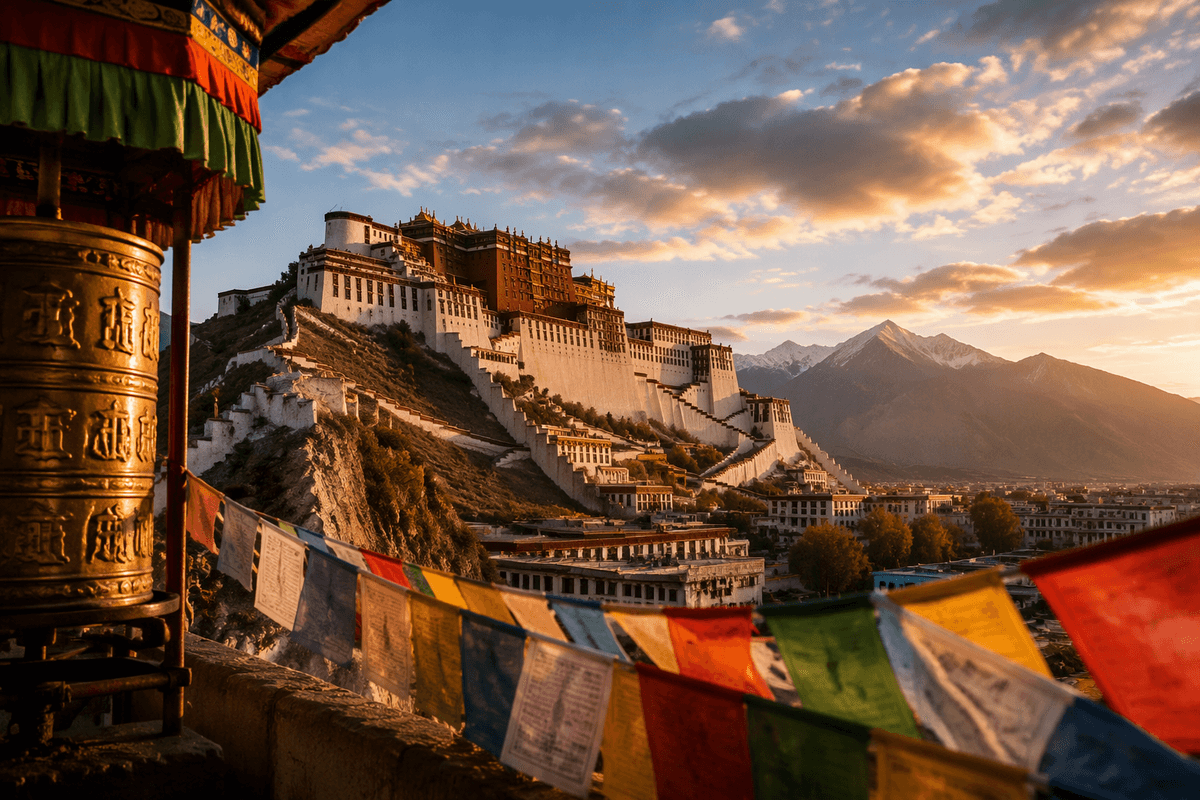
Plan like altitude is a fixed appointment you can’t reschedule: the first 24–36 hours are for arriving, checking in with your Tibet-group guide, and doing only flat, nearby loops. The constraint is psychological as much as physical—you’ll want to justify the permit and tour cost by doing more immediately. Resist that impulse. A slower start makes the Potala/Jokhang days workable, and it keeps your one day trip from turning into a miserable “look out the window” endurance test.
Day1 Arrive, acclimate—Must rest; Opt Barkhor; Skip hikes.
I underestimated how long “arrival” actually takes in Tibet—not the flight time, but the handoff time. Between the airport/train pickup, the first hotel check-in, and the guide doing the initial permit verification, the day fragments fast. It’s tempting to treat the afternoon as free real estate, but altitude makes that math wrong: even a mild push (a long walk, a few flights of stairs, an enthusiastic first dinner) can turn night one into the worst-sleep combo of headache and racing pulse.
What worked: make Day 1 intentionally small and flat. I’d aim for a nap or at least horizontal time, then a single easy loop near the Barkhor area if you’re feeling steady. The Barkhor kora is useful on day one because it’s flexible—you can do 10 minutes and stop, or keep circling if you’re surprisingly fine—and it gives you culture without locking you into ticket times. The limitation is crowds and sensory overload; late afternoon can feel like a moving wall of people, so earlier is calmer if your schedule allows.
What I’d skip entirely: any “quick hike” or viewpoints that require stairs. They sound harmless, but the payoff-to-effort ratio is poor on day one, and you’re borrowing energy from the Potala and monastery days that actually need it.
Day2 Icons—Must Potala; Opt Jokhang; Skip long stairs.
The first real scheduling anxiety hit me the night before: Potala isn’t a “we’ll wander over whenever” sight, it’s a timed, permit-linked operation, and your guide is usually juggling multiple clients’ entry windows. This is one of those Tibet constraints you can’t out-will—so I treated Day 2 like a single priority with optional add-ons, not a checklist day.
Potala Palace is the must, but it punishes overconfidence. You’ll be climbing, stopping, climbing again, and even if you’re acclimating well, the oxygen math is still the oxygen math. What worked was keeping the morning clean: an early breakfast, no detours, and a hard cap on “pre-Potala” wandering. If your guide offers the afternoon slot, push for it only if you know you sleep poorly at altitude—otherwise, having to “hold yourself back” all morning can be harder than the stairs themselves. Either way, budget recovery time afterward; the visit can feel like a workout in disguise.
Jokhang Temple is the smart optional: culturally dense, central, and not as physically demanding as piling on more viewpoints. The catch is crowd pressure—both inside and around the square—and if you’re already wrung out from Potala, the experience can blur into shuffling. I’d skip any extra staircase-heavy “just one more” stop today and spend the remaining energy on a slower circuit, tea, and an early night so the monastery day doesn’t start with you already in deficit.
Day3 Monasteries—Must Sera debate; Opt Drepung; Skip temple-hopping.
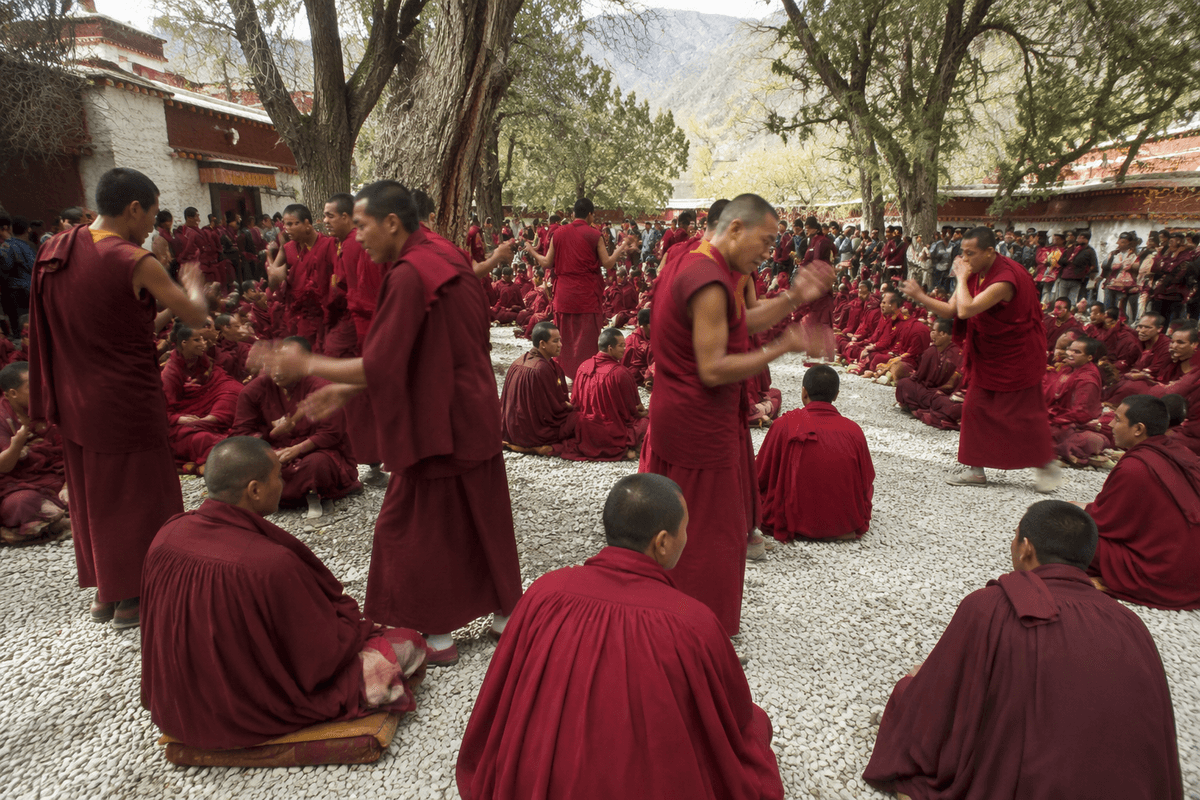
The morning I finally felt “normal” again, my guide suggested squeezing three monasteries before lunch, and I had to be the boring adult: pick one that actually has a moment. Sera Monastery’s debate courtyard is that moment, and it’s worth structuring the day around because it gives you something you can’t replicate by speed-walking through chapels. The constraint is timing—if you arrive too early you’ll idle, too late and you’ll get a partial session—so I’d rather cut a “bonus” stop than gamble on the debate window.
At Sera, what worked was treating the debate like a fixed appointment and everything else as optional. The courtyard can get shoulder-to-shoulder in peak season, and if you’re short or stuck behind phones, the experience flattens fast. I found it better to arrive with enough buffer to claim a decent viewing spot, then leave before I hit the attention/fatigue wall—because at altitude, standing still in a crowd can feel oddly draining.
Drepung is the add-on I’d choose if you woke up sleeping well and you’re not already carrying yesterday’s Potala “leg tax.” It’s bigger, more spread out, and the walking adds up in a way that doesn’t feel dramatic until you’re suddenly bargaining with yourself over one more set of steps. What I’d skip is temple-hopping for its own sake: multiple small monasteries can blur into the same dim rooms and butter-lamp smoke, and you’ll pay for it later when your one day trip needs you functional, not fried.
Day4 Old town—Must Barkhor kora; Opt tea-house; Skip shopping sprees.
I hit my first real “old town” decision at the edge of the Barkhor: join the clockwise current immediately, or duck into a quieter side lane and come back when I had more patience. Day 4 is where Lhasa starts to feel deceptively easy—flat streets, constant movement, lots to look at—but it’s also where crowd friction can quietly drain you faster than stairs. What worked best was treating the Barkhor kora as the day’s anchor and doing it early, when the loop feels like a lived-in routine rather than a slow shuffle behind tour flags.
The kora is most rewarding when you let it be repetitive on purpose: one full circuit to orient yourself, then a second partial loop only if you still feel steady. If you try to turn it into a “see everything in every alley” mission, you’ll spend the day negotiating foot traffic, shopkeepers, and decision fatigue. The practical constraint here is time leakage—ten minutes of browsing becomes forty, and suddenly you’re rushing meals, skipping rest, and arriving at tomorrow’s day trip already a little cooked.
If you want one intentional pause, a tea-house stop is the high-return option: warm, seated, and culturally specific without adding altitude stress. I’d skip shopping sprees unless you’ve built a hard cutoff time; bargaining is fun until you realize you’ve traded your best energy window for carrying bags back to the hotel.
Day5 Beyond Lhasa—Must Yamdrok Lake; Opt Gyantse; Skip tight timelines.
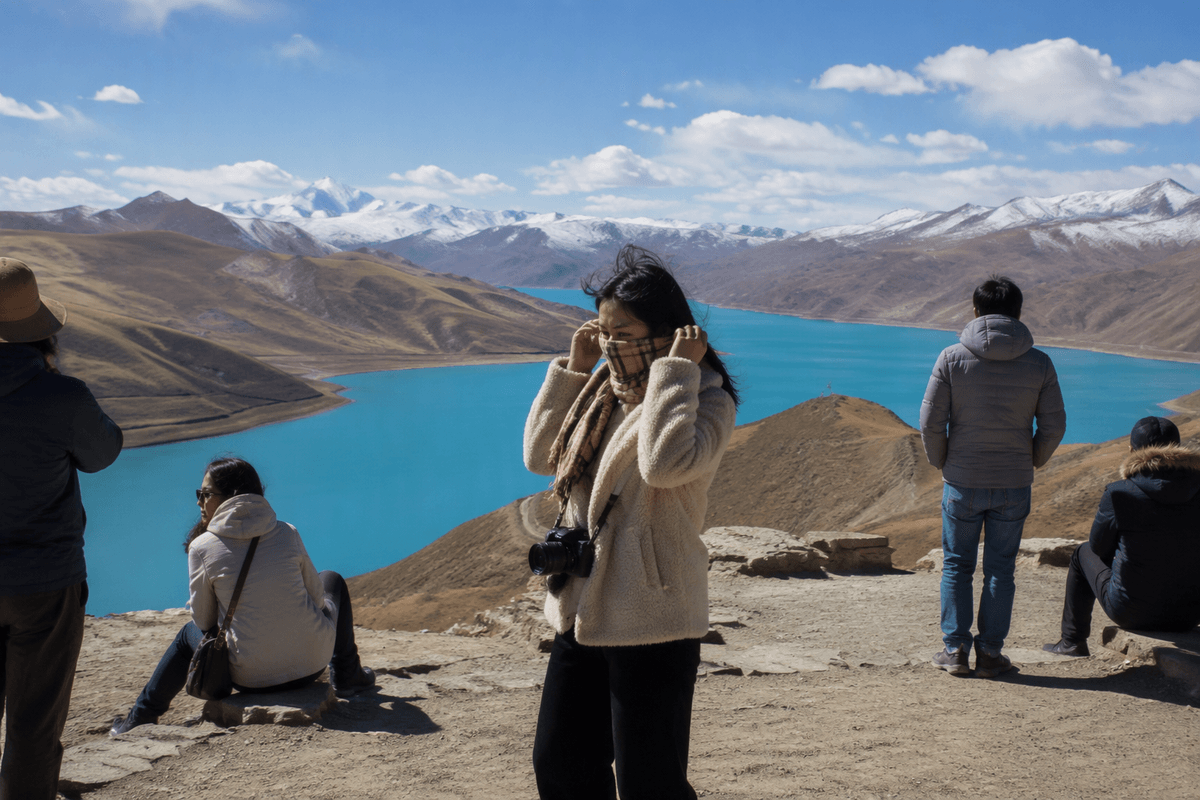
My Day 5 alarm went off in the dark, and I immediately regretted agreeing to a “sunrise departure”—not because it’s impossible, but because you’re stacking two stressors at once: early-morning grogginess plus higher altitude the moment you start climbing out of Lhasa. Yamdrok Lake is the one day trip that consistently earns its time, mostly because the payoff is visual and immediate; even if your energy is mediocre, you can still get a real experience from a few well-chosen stops. What doesn’t work is pretending it’s a casual outing—between checkpoints, road conditions, and photo stops that sprawl, the clock moves faster than you expect.
Yamdrok’s best moments happen when you accept limits: pick one or two viewpoints and actually linger, instead of bouncing every ten minutes because the tour van is impatient. Wind at the lake can cut hard, and standing around at 4,000m+ can feel strangely tiring even if you’re not “doing” anything, so a warm layer and a realistic tolerance for short walks matter more than squeezing in extra scenery.
Gyantse is the sensible optional if (and only if) your group is running on time and you’re not fighting a low-grade altitude headache. It adds cultural texture after the lake, but it also adds time debt on the return—meaning dinner gets late, sleep gets shorter, and you end the trip wrung out. If your guide proposes Yamdrok + Gyantse + “one more stop,” this is the day to say no; a clean, unhurried lake day beats a tight timeline that turns everything into windshield tourism.
Wrap-up: Lhasa takeaways—Must hydrate; Opt souvenirs; Skip overpacking.
On my last morning, I did the classic mistake: tried to “use up” the remaining hours with one more wander, then realized my body was still negotiating the altitude—just more quietly than on day one. The single non-negotiable takeaway is hydration, but not in the vague wellness sense: if you’re not actively drinking (and balancing it with regular meals), the headaches and sleep disruption sneak back in right when you think you’ve adapted. The annoying constraint is that toilets and long drives don’t pair well with constant water, so you have to plan your sips around transfers and ticketed sites, not just your thirst.
If you want to bring something home, pick one category and buy it deliberately—small items that don’t punish you at checkout or on flights. I found souvenirs most enjoyable when they were tied to a specific stop (a simple prayer-flag bundle after the Barkhor, something practical like tea), not when I was panic-buying at the end. What I’d skip is overpacking “just in case” layers and gear: you’ll carry it up Potala stairs and into crowded lanes, and the weight-to-utility ratio gets ugly fast at 3,650m.





![Best Cash Alternatives [Get Yield on Short-Term Investments]](static/image/2026/08/03/87e885cb-e070-4bb6-902b-704f3bb1fb84.png)