When the baby arrives, the budget shifts overnight
The week a baby comes home, the numbers stop behaving the way they did during pregnancy. One more pharmacy run turns into three. A “quick” food order shows up because nobody slept. Then the first bill lands that doesn’t feel optional: extra pediatric visits, a lactation consult, a pump part you didn’t know existed, the copay that hits before the deductible is met. At the same time, paychecks may shrink from leave, and time to price-shop disappears.
What surprises most households isn’t the big one-time gear—it’s how many small, recurring charges show up at once, and how fast they stack. If you wait for a calm month to reorganize spending, you’ll end up reacting with a credit card. The next step is to capture the cash flow as it really is now, not how it used to be.
Tip 1: Build a two-month cash-flow snapshot
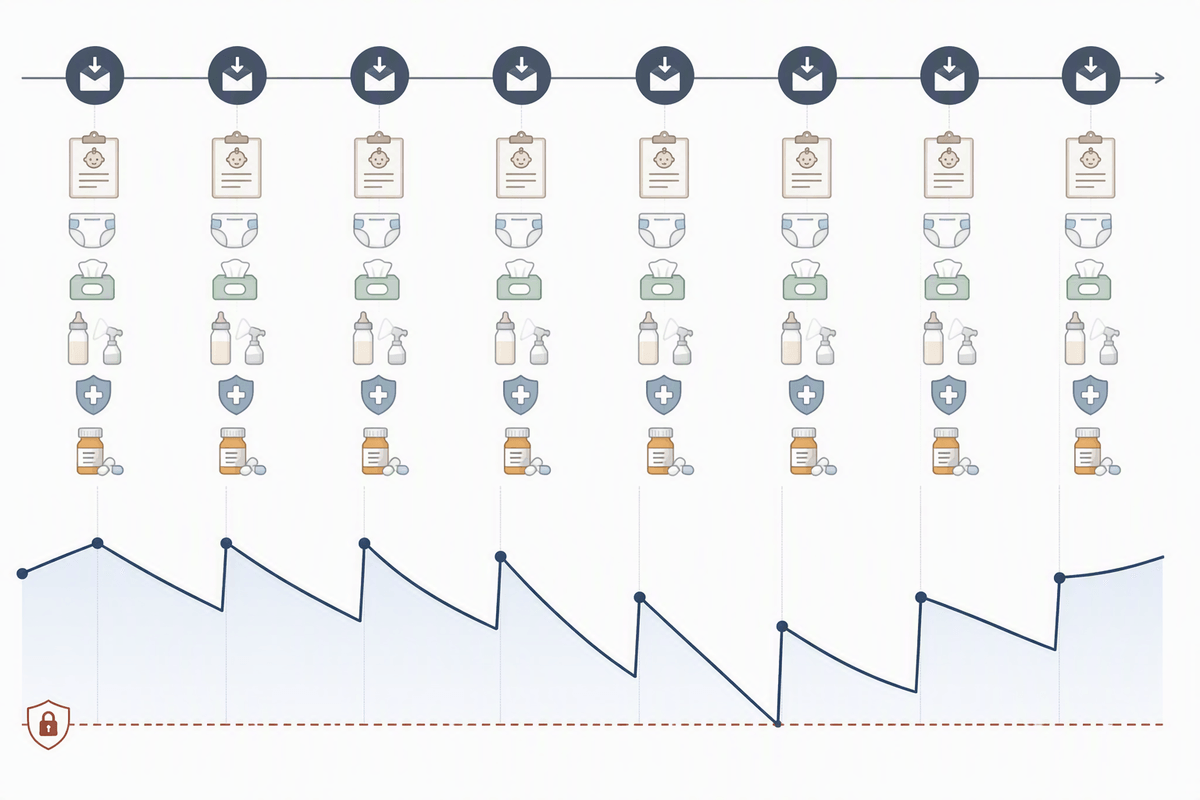
So instead of rebuilding the whole budget, take a short window and make it brutally accurate. Pick the next eight weeks and lay them out by pay date, not by month. Write down what will actually hit: your reduced leave pay (and the week it starts), daycare deposits or the first full invoice, formula or pump supplies, diapers, wipes, and the “random but predictable” medical costs like copays and prescriptions. Use the last two weeks of bank and card activity as a guide, because memory gets optimistic when sleep is scarce.
Now add timing and friction. Some expenses bunch up: insurance premiums, hospital payment plans, or a pediatrician bill that arrives after the visit. Put those on the week you’ll pay them, then subtract them from expected take-home pay to see the low points. If the snapshot shows you dipping below a set floor—say one mortgage/rent payment kept in checking—choose a simple fix before anything else: pause extra debt payments for one cycle, lower grocery targets with a meal plan, or move a non-urgent purchase to week nine. The goal isn’t perfection; it’s seeing the pinch before the card comes out.
Tip 2: Choose what must be new for safety
Once that eight-week snapshot is on paper, the gear decisions feel less like a shopping list and more like risk management. The mistake I see is people trying to “save everywhere” and then quietly overspending on panic buys at 2 a.m. Pick a short list of items that are worth buying new because safety depends on condition and history: a car seat, a crib mattress, and anything that’s meant to protect breathing or prevent falls. The constraint here is timing—if you’re close to delivery, hunting for the “perfect used deal” can cost more in rush shipping and returns.
Everything else becomes fair game for used, borrowed, or “good enough for now.” A bassinet from a friend, a secondhand dresser instead of a “nursery set,” a stroller that’s a few model years old—those swaps can free real cash for the unglamorous stuff that actually hits monthly. Before you buy used, set one rule: if you can’t verify it’s clean, complete, and not recalled, you pass, even if it’s cheap. That single guardrail prevents the most expensive kind of savings: the kind you have to replace twice.
Tip 3: Lower recurring costs before you optimize gear

After the “buy new vs. used” list is settled, the next leak usually isn’t the stroller—it’s the stuff that quietly drafts behind you every week. If cash is tight, the highest-impact move is to lower recurring costs first, because those savings compound while you’re too tired to micromanage purchases. The constraint is friction: calling providers, changing plans, and updating autopay feels impossible when you’re already juggling feeds and naps, but a couple of changes can buy back breathing room fast.
Start with the bills that don’t care how cute the nursery looks. Reprice car and home/rent insurance, then look at the phone plan and any streaming or delivery subscriptions you added “temporarily.” If daycare is imminent, ask about schedule options, part-time tiers, or sibling policies even if you only have one child—centers sometimes have different rate structures than what’s posted. If formula is on the table, price it by cost per ounce and commit to one store’s subscribe-and-save only if you can pause it without penalties. Then, with those monthly numbers lowered, the gear decisions stop feeling urgent, and you can wait for a good used deal instead of paying for convenience.
Tip 4: Put guardrails on convenience spending
By the time the bills are trimmed, the real threat usually isn’t a big splurge—it’s the “we just need it today” pattern. Convenience spending shows up when energy is low: delivery fees, last-minute pharmacy runs, overnight shipping on a bottle part, grabbing whatever brand is in stock. None of it feels reckless in the moment, and then the card statement reads like a bad week, because it was a bad week.
Guardrails work better than willpower. Pick a weekly convenience allowance that fits your snapshot (even $25–$50), and separate it on purpose: a small checking buffer, a prepaid card, or a dedicated category that dings you when it’s empty. Add one rule that creates a pause without creating danger—no paid rush shipping unless it’s health or feeding related, and no food delivery two days in a row. When the allowance is gone, the decision becomes automatic, not emotional.
Then set up a “default rescue plan” for the predictable emergencies: a short list of store pickups, a shared note with approved substitutions (diaper size, formula type, detergent), and one friend or family member who can do a run. That way convenience stays a tool, not a leak.
Keep essentials protected, even when money feels tight
A tight month has a way of pushing the wrong buttons. The stroller feels like the problem, but the real risk is letting essentials quietly slide: skipping an insurance payment to “catch up next check,” delaying a pediatric bill until it turns into collections, or letting the emergency fund get raided for groceries and then never rebuilt. The constraint is emotional as much as financial—when sleep is low, short-term relief starts to look like a plan.
Pick three protections you won’t negotiate for the next 90 days: housing, core insurance (health plus auto/home or renters), and one small emergency buffer. Even $500 kept out of reach of daily spending changes decisions. If cash flow can’t cover everything, call before you miss: ask for a hospital payment plan, request a due-date change, or pause extra debt payments for one cycle. Late fees and lapses are expensive convenience purchases in disguise.
Once those are stable, childcare becomes the next “essential.” If the numbers don’t work, solve it on paper early—start date, deposit, and backup care—so you’re not forced into the priciest option during a last-minute scramble.
A realistic 30-day plan you can repeat
The first month goes better when the plan is simple enough to run on low sleep. Think in four weeks, not “a new budget.” The constraint is timing: bills still hit on their normal dates, while baby costs arrive whenever they feel like it. So the goal is a repeatable cadence that keeps you out of reaction mode.
Week 1: lock the floor—move your emergency buffer (even $500) to a separate account and confirm housing and insurance are on autopay. Week 2: do one recurring-cost cut (insurance reprice, phone plan, cancel one subscription) and update the eight-week snapshot. Week 3: set the convenience allowance for the week and write the substitution list (diaper size, formula, meds) so a store run is quick. Week 4: reconcile—look at what you actually spent on diapers/feeding/medical, then adjust one line item before the next 30 days starts.
If a week blows up, don’t “restart.” Just return to the next week’s step and keep the protections intact.