You’re about to sign—yet you still feel unsure
The paperwork is already in your inbox, the commission line is filled in, and the agent is moving fast—“We just need your signature so we can get started.” That should feel like progress. Instead it feels like a small trap: once you sign, switching gets awkward, and every misstep becomes your problem. The hard part is that nothing is obviously wrong yet. They’re responsive, they seem confident, and the contract language looks standard. But your gut keeps circling the same question: are they good, or just available? That hesitation is data, especially when the numbers (price, repairs, timing) can’t be undone cheaply.
Before you sign, force one last proof check that costs them time, not you money: ask for two recent listings or deals similar to yours and have them walk you through the original pricing decision, the first negotiation setback, and what they changed. If the answers stay vague—“we just know the market,” “it all worked out”—or they can’t name specific concessions, timelines, or inspection outcomes, you’re not buying expertise. You’re buying friendliness, and the contract locks that in.
Mistake: Choosing the friend who feels “easy”
So the “proof check” happens, and it still feels comfortable. They’re a friend-of-a-friend, they pick up on the first ring, and they’ll even “discount a bit” if you sign today. That ease is persuasive because it removes friction right when the transaction is starting to feel heavy. But it also rearranges the power dynamic: you stop interviewing and start accommodating. You hear yourself editing questions—about pricing strategy, disclosure risk, or how they handle low appraisals—because you don’t want to sound distrustful.
The red flag isn’t that they’re nice. It’s that the relationship becomes the qualification. The evidence gets replaced with reassurance: “I’ll take care of you,” “we’ll figure it out,” “I know a great inspector/lender/title person.” In practice, that can mean you never learn who is actually driving key decisions, whether they’ve worked your micro-market in the last 90 days, or whether their “team” includes referral relationships that quietly steer choices. The constraint is timing: once you’re under contract, asking these questions feels like picking a fight—and switching costs real money and momentum.
Consequence: Pricing confidence collapses after week one
A week in, the confidence starts to thin out in small, expensive ways. The listing hits, showings come through, and the early feedback isn’t dramatic—it’s just consistent: “price feels high,” “layout doesn’t match comps,” “we’re watching.” Your agent’s tone shifts from certainty to improvisation. They begin referencing broader headlines instead of the exact closed sales they used to justify the number. If you’re a buyer, it looks similar: the first offer gets brushed off, then the same property takes a comparable offer anyway and the agent retrofits an explanation.
The real cost is psychological and tactical. Once you’re second-guessing the price, every next move feels like a guess: a $10,000 price cut, a rushed escalation clause, a repair credit offered too early. Timing tightens fast—days on market tick up, or your rate-lock window shrinks—and now the agent is “testing” pricing with your leverage. That’s when the relationship discount stops mattering and the pricing gap starts compounding.
The negotiation test arrives—and they go quiet

Then the first real negotiation shows up—inspection findings, an appraisal that lands light, a buyer asking for a credit instead of repairs. This is where a capable agent gets loud in a productive way: quick call, clear options, a draft counter with numbers that protect your net and your timeline. Instead, the messages slow down. “Let me check with my broker.” “I’m waiting to hear back.” Hours turn into a day, and the other side starts anchoring the conversation while your leverage decays.
The silence is the test. Ask for a written plan in the next 60 minutes: (1) what you’re willing to give, (2) what you’ll trade for it (closing date, release language, appraisal gap coverage), and (3) the walk-away point. If they can’t put numbers to concessions, won’t name a specific counter strategy, or keep pushing “just accept it” to avoid tension, you’re seeing the real service level—when the stakes are highest and the clock is running.
Paperwork reveals the conflicts they didn’t mention
The quiet usually breaks when the documents start circulating outside your texts: the agency disclosure, the title commitment, the inspection addendum, the repair request, the lender’s conditions. Suddenly there are names you haven’t heard, and a few boxes pre-checked as if the path was decided already. The agent who was “flexible” is now steering hard—use this inspector, use this lender, use this closing attorney—because “they’ll get it done on time.” The constraint is real: you’re inside short contingency windows, and swapping vendors can restart clocks or create new delays.
This is where undisclosed conflicts show themselves in writing. Dual agency language appears late, or their teammate is on the other side and they gloss over what that limits them from advising. A “preferred provider” turns out to be a referral pipeline, and the agent pushes back when you ask who pays whom. You don’t need a scandal to have a problem; you just need misaligned incentives when you’re deciding repairs, credits, or whether to terminate. Ask for a clean list, in writing, of every referral relationship and any financial benefit tied to the vendors they’re recommending—and treat any reluctance as a pricing and risk signal, not a personality quirk.
Deadlines slip because the process was never managed
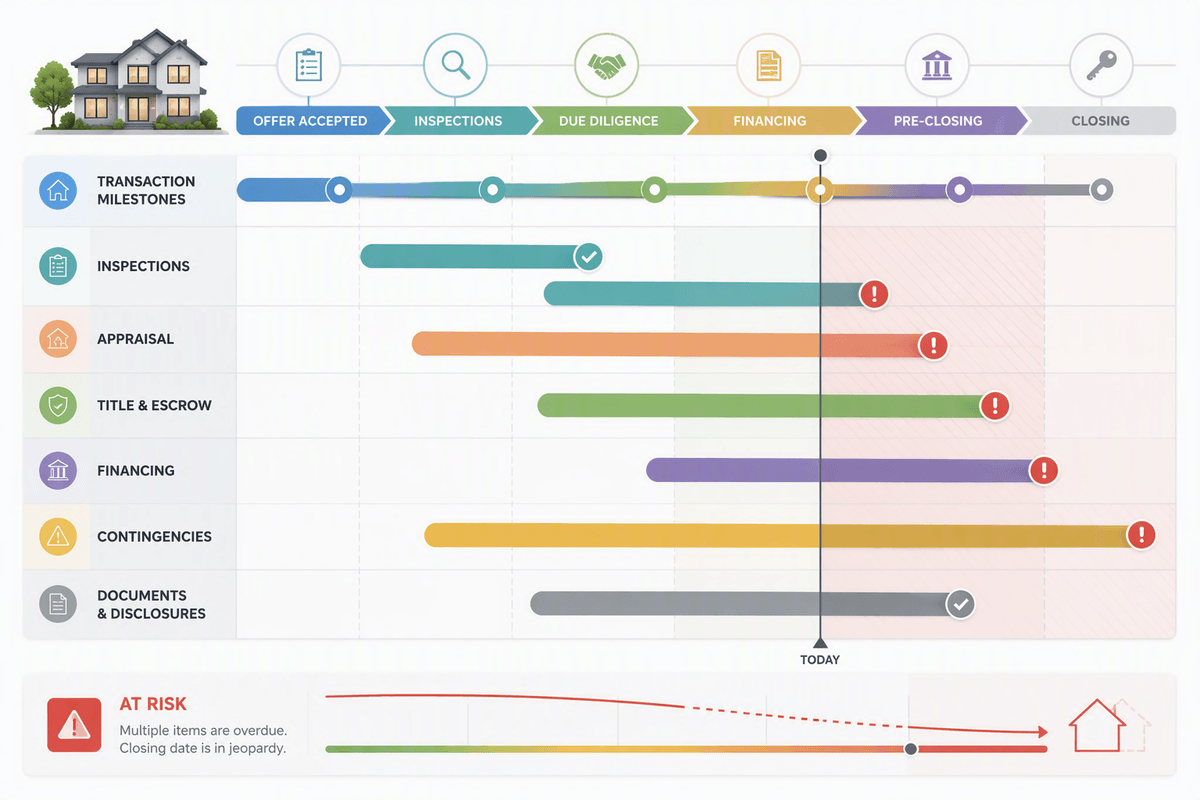
The next thing that breaks isn’t the deal terms—it’s the calendar. The inspection objection window is suddenly “basically tomorrow,” the lender asks for one more document, title flags something small, and nobody is clearly running the checklist. Your agent forwards emails instead of setting a sequence: who responds, by what time, and what happens if the other side misses the cut-off. The constraint is hard and mechanical: contingency dates don’t care that everyone is busy, and a missed deadline can default you into acceptance or force a costly extension.
When the process was never managed, delays look like bad luck but behave like pattern. Repair bids aren’t ordered early, the appraisal isn’t tracked, and signatures get requested at 9:30 p.m. with “ASAP” as the plan. Each slip chips away at leverage—rate locks get extended, movers get rescheduled, the other side starts asking for concessions “because we’re already late.” Ask for a single written timeline within the hour: all contingencies, due dates, who owns each item, and the next two outbound touches they’ll make today. If they can’t produce that, the delays are baked in.
Reflection: A safer way to shortlist fast
By the time the calendar starts slipping, the “chemistry test” has already failed. The safer fix isn’t becoming cynical; it’s tightening the shortlist so the decision is based on observable work, not availability. Give yourself one evening and a hard constraint: three candidates, 20 minutes each, same prompts, no exceptions. If someone can’t make time for that, they won’t make time for an appraisal problem at 4 p.m. on a Thursday.
Run a simple scorecard: (1) one recent deal like yours with the pricing math and the first adjustment they made, (2) a negotiation example with a counteroffer structure and numbers, (3) a sample timeline/checklist they actually use, and (4) written disclosure on dual agency and referral relationships. Then ask for the fee and what you get for it—marketing plan, showing feedback cadence, escalation/repair strategy. Pick the agent who produces artifacts, not the one who produces comfort.











![Best Cash Alternatives [Get Yield on Short-Term Investments]](static/image/2026/08/03/87e885cb-e070-4bb6-902b-704f3bb1fb84.png)