Why expectations matter before choosing bariatric surgery
The first place expectations get tested is usually a random weekday: you’re rushing between meetings or school pickup, you take a few bites “because you should,” and your body answers back in a way dieting never did. It may feel like the surgery is supposed to flip a switch—no hunger, steady weight loss, instant energy. But the early reality can be uneven: fullness can show up suddenly, thirst can masquerade as hunger, and a “normal” portion can leave you tight, queasy, or weirdly tired.
Those surprises don’t mean something is going wrong; they’re often feedback you haven’t had to listen to before. Bariatric surgery changes capacity (and sometimes absorption), so the day-to-day wins tend to look less like willpower and more like systems: hydration that doesn’t compete with meals, protein that doesn’t upset your stomach, and routines you can repeat when life gets messy. The progress can be inconsistent—good weeks and frustrating weeks—so expectations that allow adjustment usually hold up better than expectations built on perfection.
Pre-op workup as rehearsal, not just clearance

It’s often the tiniest pre-op task that exposes the real friction: you’re told to sip water all day, but your calendar only has “meeting blocks,” not “sip blocks.” Or you practice slowing down at dinner and realize you’ve been finishing meals on autopilot, barely noticing the point where “comfortable” turns into “too much.” The workup can feel like a paperwork obstacle course—labs, a sleep study, nutrition visits, maybe a psych eval—but the more useful way to read it is as a rehearsal for the exact routines that get stress-tested after surgery.
Tracking protein for a week, spacing fluids away from meals, and trialing vitamins isn’t about proving you deserve surgery; it’s about finding your failure points while the consequences are low. If reflux shows up when you eat fast, or energy drops when breakfast becomes optional, that’s early data. The pre-op “practice” doesn’t always predict post-op tolerance perfectly, but it does reveal what needs a system instead of motivation.
Choosing a procedure means choosing trade-offs
At a consult, it’s easy to hear procedure names as if they’re just different “sizes” of the same solution. Then you mention heartburn, or a history of anemia, or the fact that you travel for work and miss meals, and the room gets quieter. The choice starts to look less like “most weight loss” and more like which problems you can afford to manage. A sleeve may feel simpler on paper, but if reflux is already part of your week, that trade-off can matter. A bypass may help some people with reflux and appetite shifts, yet it can also raise the stakes on vitamins and long-term labs in a way that’s harder to wing when life gets chaotic.
The frustrating limitation is that no option guarantees a predictable appetite or an effortless relationship with food. Each route changes how quickly fullness hits, what textures sit well, and how reliably energy shows up between meals. Deciding well usually means treating side effects, follow-up intensity, and daily routines as part of the “procedure,” not as separate add-ons you’ll figure out later.
Early recovery feels different than most people assume
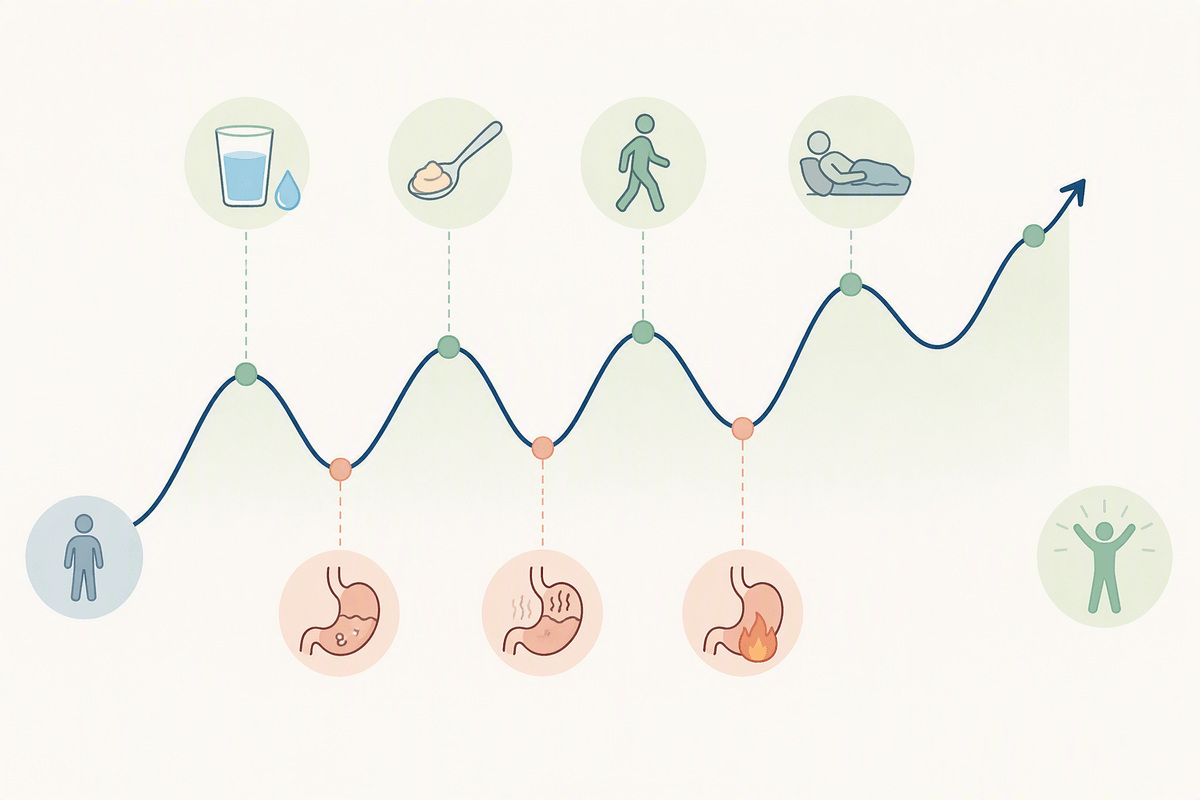
The first morning home can be oddly confusing: you’re not “hungry,” exactly, but you’re not comfortable either. A few sips feel fine, then one extra swallow lands heavy, like it’s sitting behind your breastbone. People often expect pain to be the main headline. More often, it’s timing—how fast you sip, how long you wait, whether you stood up too quickly, whether your stomach is simply done for now. That mismatch can make the day feel like a test you didn’t study for.
Energy can be the other surprise. Even with a smooth surgery, the early weeks may feel like low battery: short walks help, but fatigue arrives suddenly, and naps can disrupt the “I should be back to normal” narrative. Bowel changes, mild nausea, or reflux can drift in and out, which tempts you to label the week a success or a failure. It usually works better to read those swings as feedback on pacing, texture, and hydration—because early recovery isn’t linear, just trackable.
Eating rules create surprises, not just discipline
The first “rule” that catches people off guard is how ordinary habits collide: you take two polite bites, then instinctively chase them with a big sip. A minute later, there’s pressure—sometimes a gurgly, stacked feeling that makes you wonder if you ate too much, too fast, or the wrong thing. It can feel unfair because the portion was tiny. But the new limitation isn’t just size; it’s traffic control. Fluids, air from hurried bites, and certain textures can compete for space, and the result reads like discomfort rather than a clear “full” signal.
Then the discipline story gets messier. Protein that “should” work may suddenly taste metallic, or sit heavy at breakfast but go down fine at lunch. A stall week can arrive right when you’re following the plan, while a day with more steps and better sipping quietly improves energy and bowel regularity. In real life, the rules function less like a pass/fail checklist and more like a set of levers—timing, texture, temperature, and pace—that you keep adjusting as your tolerance changes.
Weight loss changes hormones, mood, and identity
It might start as a strange morning: you’ve eaten the same small breakfast, but your mood is sharper than you expected, or you feel oddly flat even while the scale is moving. Some people assume the mental part is purely “finally I have willpower,” yet rapid weight loss can shift sleep, stress tolerance, and the way hunger shows up. You may notice waves—days when food noise is quiet, followed by days when cravings feel loud for no clear reason. That inconsistency can be frustrating, especially if you’re trying to judge whether you’re doing things “right” based on appetite alone.
Identity changes can sneak in, too. Compliments land differently when you’re still learning new portions, new clothes, and a body that tires out faster on some weeks than others. Social routines built around food can feel awkward: you’re not refusing, you’re just limited. The same shift that makes eating easier can also make emotions harder to label, which is why mood, energy, and confidence don’t always change at the same speed.
Long-term follow-up is where outcomes stabilize
Six months later, the “weird” symptoms are easier to ignore because they’re quieter. You might just notice you’re tired more often, your hairbrush is fuller, or reflux pops up when dinner gets rushed. It’s tempting to treat that as personal backsliding, especially if weight loss slows. But this is often when follow-up starts doing the most work: patterns that felt like random bad days—lightheaded afternoons, constipation, cravings that spike after poor sleep—can line up with hydration gaps, protein inconsistency, or supplements that drifted once the routine got busy.
Labs and check-ins can feel boring compared with the early milestones, yet they’re the guardrails that catch small problems before they compound. The feedback isn’t instant: iron, B12, vitamin D, and protein status don’t always announce themselves loudly. When you treat fullness, energy, and bowel changes as data instead of a verdict, the long-term plan stops feeling like “staying perfect” and starts feeling like staying calibrated.









![Best Cash Alternatives [Get Yield on Short-Term Investments]](static/image/2026/08/03/87e885cb-e070-4bb6-902b-704f3bb1fb84.png)