Why Provincetown feels different at the edge
The first time you hit the last curve on Route 6 and the town suddenly narrows into water and dunes, it’s hard not to pause and think, “Is this going to be a hassle?” It can be—summer traffic and parking aren’t abstract problems here—but that “edge of the map” feeling is exactly what makes Provincetown feel unlike the rest of the Cape.
Ptown runs on a tight, walkable spine (Commercial Street) pressed between the harbor and the dunes, which means your days naturally separate into two modes: town energy versus open-land quiet. That’s a gift if you only have 2–3 days, because you don’t need a car once you’re in; it’s also a constraint because you can’t casually “pop over” to a beach without thinking about wind, time, and how far you want to trek.
If you like art and LGBTQ+ nightlife but still want dunes and real beach time, plan for one “town-first” day and one “weather-first” day. Ptown rewards flexibility; rigid itineraries get punished by crowds, sun, and the simple fact that there’s nowhere else to sprawl when the sidewalks fill up.
When to visit and how to get around
The real fork-in-the-road decision happens before you even see the dunes: do you want to arrive relaxed, or do you want your own wheels as a safety net? In summer, the ferry (from Boston) wins on sanity—no Route 6 crawl, no circling for a spot—especially if you’re only here 2–3 days. It does cost more than gas, and you’re committing to a schedule (miss it and your whole evening shifts), but it drops you close enough to start your trip on foot instead of in a parking lot.
If you drive, aim to roll in earlier than you think you need to (late morning starts feel “reasonable” and then become the busiest possible choice). Parking is doable, just not casual: expect paid lots, longer walks, and the nagging feeling that every quick errand costs time. Once you’re in town, walking is the default; bikes are fast but can feel jittery in peak pedestrian hours, and rideshares can be inconsistent when everyone’s leaving at once.
A flexible 2–3 day rhythm that holds up: arrive and do a town-first afternoon/evening (gallery browsing, dinner, a show); keep the next morning weather-first (dunes/beach), because wind and fog change the vibe fast; then use your final half-day as a buffer for whatever you skipped—plus the one thing worth booking ahead: ferry seats, bikes, and any “must-have” dinner reservation.
Art and nightlife on Commercial Street
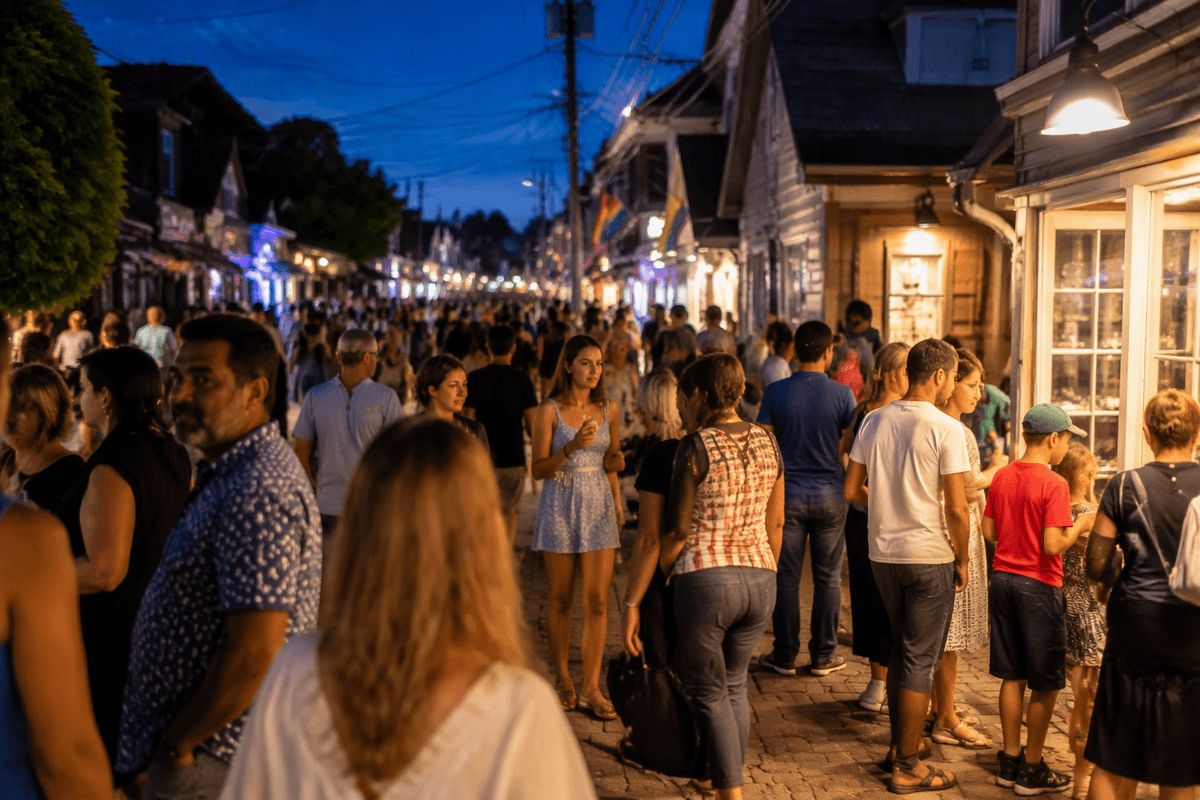
I learned quickly that Commercial Street doesn’t “warm up” gradually—you step into it and you’re immediately negotiating gallery windows, gelato lines, and people drifting at the pace of a slow parade. It works in your favor if you treat art like a series of short sprints (15–20 minutes per gallery, then a break), not a museum-style marathon. The small spaces are easy to pop into, but they also get crowded fast in late afternoon, when everyone’s done with the beach and suddenly feels cultural.
For a first-timer with limited time, I’d prioritize two passes: an earlier, quieter lap to actually look (and talk to staff without shouting over the door chime), then a second evening lap when the street turns into its own kind of show. The catch is that the evening version is less efficient—sidewalks jam, dinner waits stretch, and “just one more gallery” becomes a zigzag around groups taking photos. If you’re arriving by ferry, this is where the no-car setup shines: you can stay out late without thinking about a lot gate closing or a long, dark walk back to wherever you parked.
Nightlife here is high-energy but not frictionless. Popular shows and prime dinner slots can sell out or leave you stuck with a 9:30 p.m. table, which is fine if you’re leaning into the night and rough if you planned an early dunes morning. My best balance was to pick one anchor commitment (a show or a reservation) and keep the rest loose—because in Ptown, the most memorable nights are often the ones you didn’t schedule, and the most annoying ones are the ones you tried to over-control.
History beyond the postcard Pilgrim story
I almost skipped the history piece because the Pilgrim Monument reads like something you “should” do, not something you want to do—until a breezy afternoon made the beach feel like work and I needed an indoor-leaning plan that still felt like Provincetown. The monument climb is a quick reality check: you pay for the view with stairs, and on humid days it’s more sweat than scenery. But if you go earlier (or later, when the light softens), the payoff is orientation—harbor, dunes, and just how thin the town really is.
What actually sticks, though, is the less postcard-friendly story: Provincetown as a working port, an art colony, and a place people chose because it was far enough to be themselves. The museum component (and smaller historical stops) works best as a “between” activity—an hour that bridges beach weather roulette and dinner plans—rather than a half-day you force through. If you’re here 2–3 days, I’d slot history on the same day as Commercial Street wandering, because it’s the lowest-effort pairing: minimal transit, easy to bail out if crowds spike, and you’re not burning your best sun window on something you could do in fog.
Beaches, dunes, and Cape Cod National Seashore
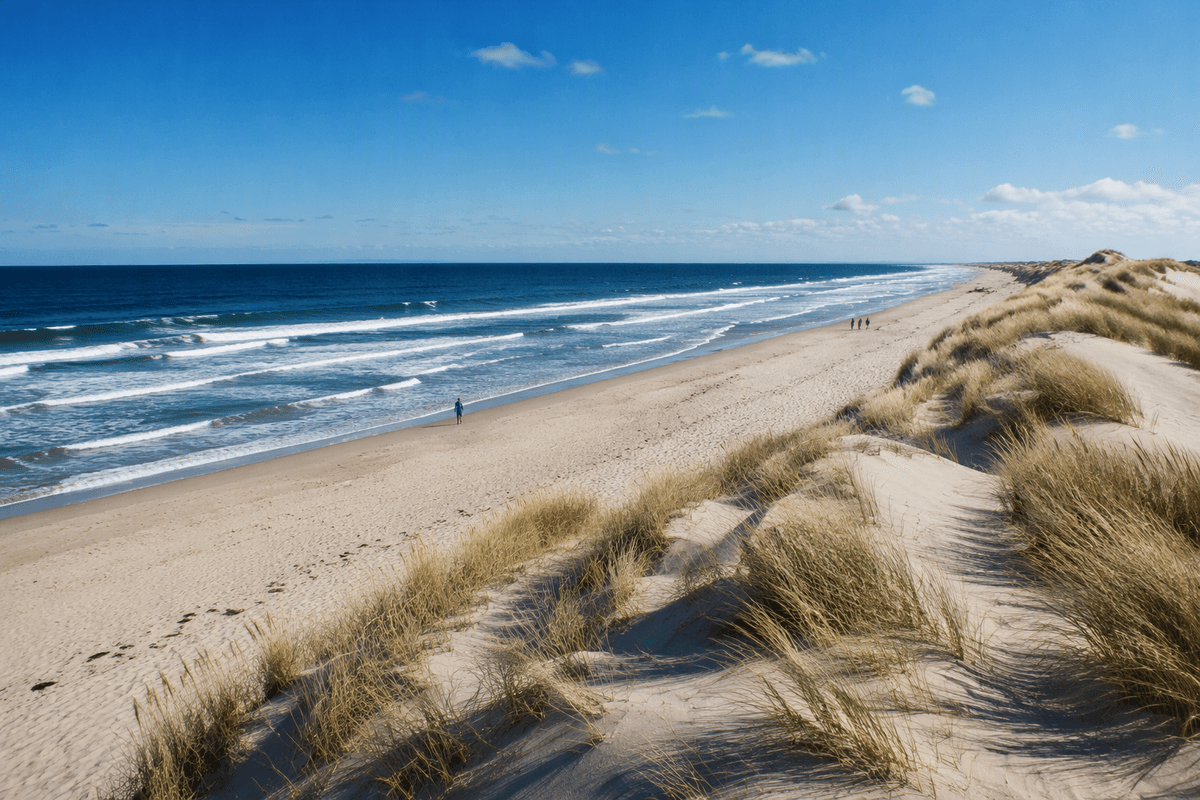
The morning I finally committed to the dunes, the harbor looked calm enough to lull me into a slow start—then the wind picked up and suddenly “I’ll just do the beach later” felt like a mistake. That’s the big mental shift in Provincetown: you don’t schedule dunes around your day, you schedule your day around whatever the sky is willing to give you. If it’s bright and relatively still early, push your outdoor time to the front; if it’s foggy or gusty, the same walk can feel twice as long and half as rewarding.
For first-timers, I’d split beach time into two categories so you don’t overreach: a quick harbor-side option for an easy dip and a real National Seashore stretch when you want that “wide-open Atlantic” payoff. The Seashore beaches are the ones you’ll remember, but they’re not free in effort—getting there usually means a bike ride or shuttle timing, and the return trip feels longer when you’re sandy, sun-drained, and realizing you still need a shower before dinner. If you drove, having the car helps with the gear-and-towel problem, but it also tempts you into mid-day parking moves that eat an hour.
The dunes are the wildcard: spectacular when conditions cooperate, oddly punishing when they don’t. I liked them most as a half-day commitment with a clear “turnaround time,” because once your legs are tired, every extra mile is a negotiation—and Ptown evenings are too good to arrive back cranky and depleted.
Pulling it together: the Provincetown you’ll remember
On my last night, I stopped trying to “fit Provincetown in” and instead picked what I wanted the day to feel like: either easy-town (art, history, long dinner, a show) or earned-outdoors (dunes or Atlantic first, then a simpler evening). That single choice prevents the most common mistake here—stacking a big beach push on top of a big Commercial Street night and wondering why everything feels rushed.
If you’re torn on ferry vs car, use this rule: ferry if you’re staying central and want your time back; car if your lodging is outside the core or you know you’ll resent carrying beach gear. Either way, build around early starts and one booked “anchor” per day—anything more turns crowds and weather into a mood.
The Provincetown you remember isn’t the perfect checklist; it’s the moment you let the town’s narrowness work for you, not against you.