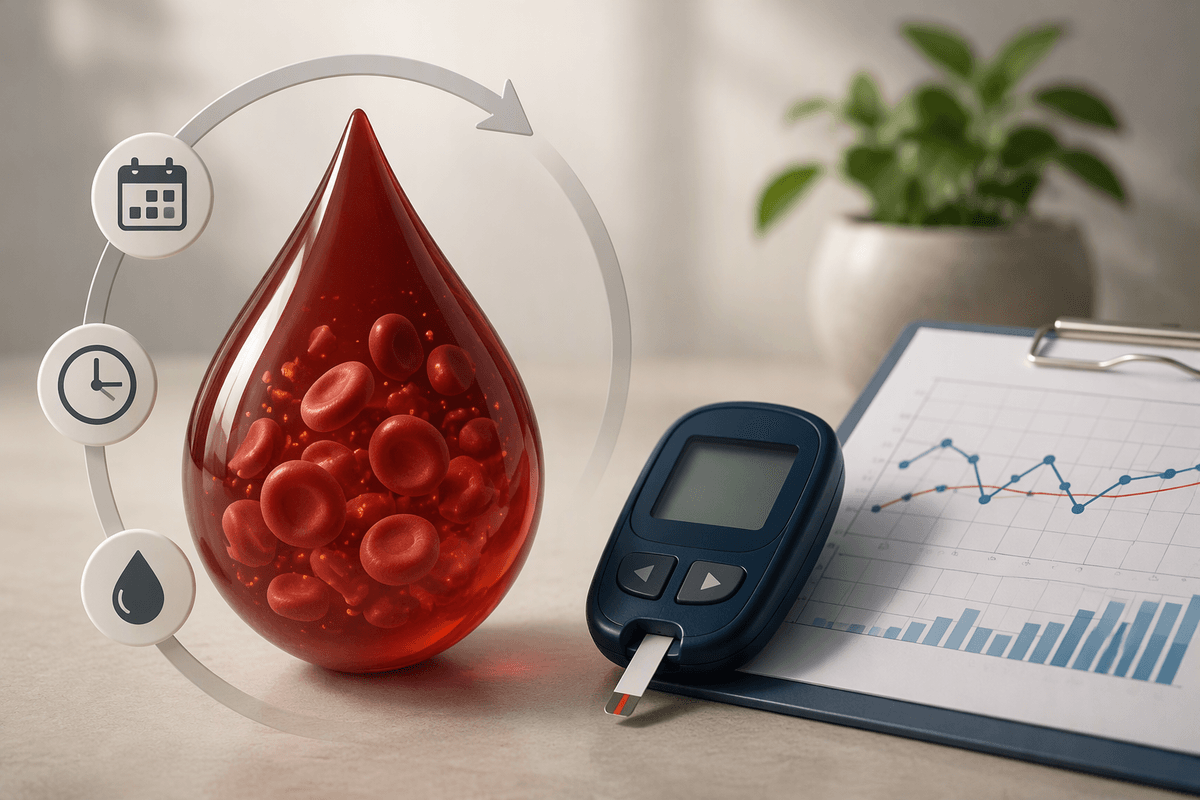
What “heart failure” actually means day to day
The label can feel harsher than the day-to-day reality. You might still be doing the same errands and chores, just noticing small “friction” in your body—walking from the parking lot takes more effort, carrying groceries feels heavier, or you catch yourself pausing to breathe after a flight of stairs you used to take automatically.
In practical terms, “heart failure” usually means the heart isn’t moving blood forward as efficiently, or it doesn’t relax well enough between beats. When that happens, circulation can slow and pressure can back up. The body often tries to compensate by holding onto salt and water to keep blood flow and blood pressure steady. That workaround can help for a while, but it also makes fluid more likely to collect where you notice it: a tighter waistband by evening, sock marks at the ankles, a sudden morning weight jump, or needing extra pillows because lying flat feels uncomfortable. The tricky part is the inconsistency—some days look normal until the “reserve” runs out.
Breathlessness, swelling, fatigue: the core symptom pattern

It can start with a small misread: you assume you’re “out of shape” because you’re a little winded at the top of the stairs, or you blame the weather because walking to the mailbox feels oddly taxing. Breathlessness in this pattern often shows up first with effort, then later in quieter moments—like needing to prop yourself up to sleep, or waking up short of breath after lying flat. It may feel like your lungs are the problem, but sometimes it’s simply that fluid is crowding the space where air is supposed to move easily.
Swelling and fatigue tend to travel with it, but not in a neat, predictable way. Ankles can look normal in the morning and puff up by evening, leaving sock lines or a sense of tight skin. Fatigue can be the “heavy” kind—legs that tire early, errands that suddenly require breaks—because the body is spending energy managing backed-up pressure and extra fluid. A quick weight jump over a day or two can be one of the more practical clues that congestion is building, even if everything else feels only slightly off.
Why symptoms can change quickly or sneak up
It’s often something ordinary that tips you off: your shoes feel snug by late afternoon, or you wake up and the scale is suddenly a couple pounds higher even though dinner didn’t seem unusual. Then the next day, the swelling looks better and you wonder if you imagined it. That back-and-forth is part of why this pattern can sneak up. Small shifts in fluid can change how breathing feels, especially at night when lying flat lets fluid redistribute toward the chest, turning “fine during the day” into “why do I need extra pillows?”
What makes it feel abrupt is that the body’s compensation can hold steady until it doesn’t. A salty restaurant meal, a missed dose of a water pill or blood-pressure medicine, a cold or urinary infection, a long car ride, or even a few quieter days can nudge the balance toward retention. The extra volume raises workload and pressure, which can trigger more fluid holding—a loop that can build over 24–72 hours. And because fatigue is easy to rationalize, the earliest change is sometimes just that you start planning your day around fewer trips up the stairs.
When reasonable choices accidentally worsen fluid overload
It’s easy to make choices that feel sensible in the moment and still end up nudging fluid in the wrong direction. A busy day makes you grab canned soup, a deli sandwich, or a “healthy” frozen meal—then your rings fit tighter by evening. Or you drink extra fluids because your mouth feels dry from medications, the heat, or a long walk, and the next morning the scale is up more than you expected. None of that feels like a mistake, especially when symptoms weren’t dramatic the day before.
Part of the trap is that the body can treat salt and stress like a signal to hold on. Skipping a water pill because you’ll be in the car, taking ibuprofen for back or knee pain, or staying still after a minor illness can all shift the balance toward retention in some people. Even “resting to recover” can mean less leg-muscle pumping, so swelling lingers. The result often isn’t immediate collapse—just a quieter pattern: more pillows, less stamina, and a heavier feeling that’s easy to blame on age or a rough week.
The main causes and who tends to develop it
Sometimes the first clue isn’t a dramatic symptom, but a history that suddenly feels relevant—years of “pretty well controlled” blood pressure, a long stretch of diabetes, or a stent you haven’t thought about in a while. People often assume heart failure only follows a big heart attack, but in everyday clinics it’s just as often the slow wear-and-tear kind: pressure that keeps the heart muscle thick and stiff, or small-vessel damage that makes the heart less flexible when it tries to fill.
Coronary artery disease is a common driver, whether it caused a recognized heart attack or quieter damage over time. Rhythm problems (like fast or irregular beats) can also sap the heart’s efficiency, especially when they linger. Valve problems can add an extra workload that the body compensates for—until it can’t. Kidney disease, sleep apnea, smoking, and excess weight often sit in the background, not causing one clear “event,” but making fluid balance and blood pressure harder to manage. The tricky part is that the risk clusters, so it may feel like everything changed at once when it’s really been accumulating.
How clinicians confirm it and gauge severity
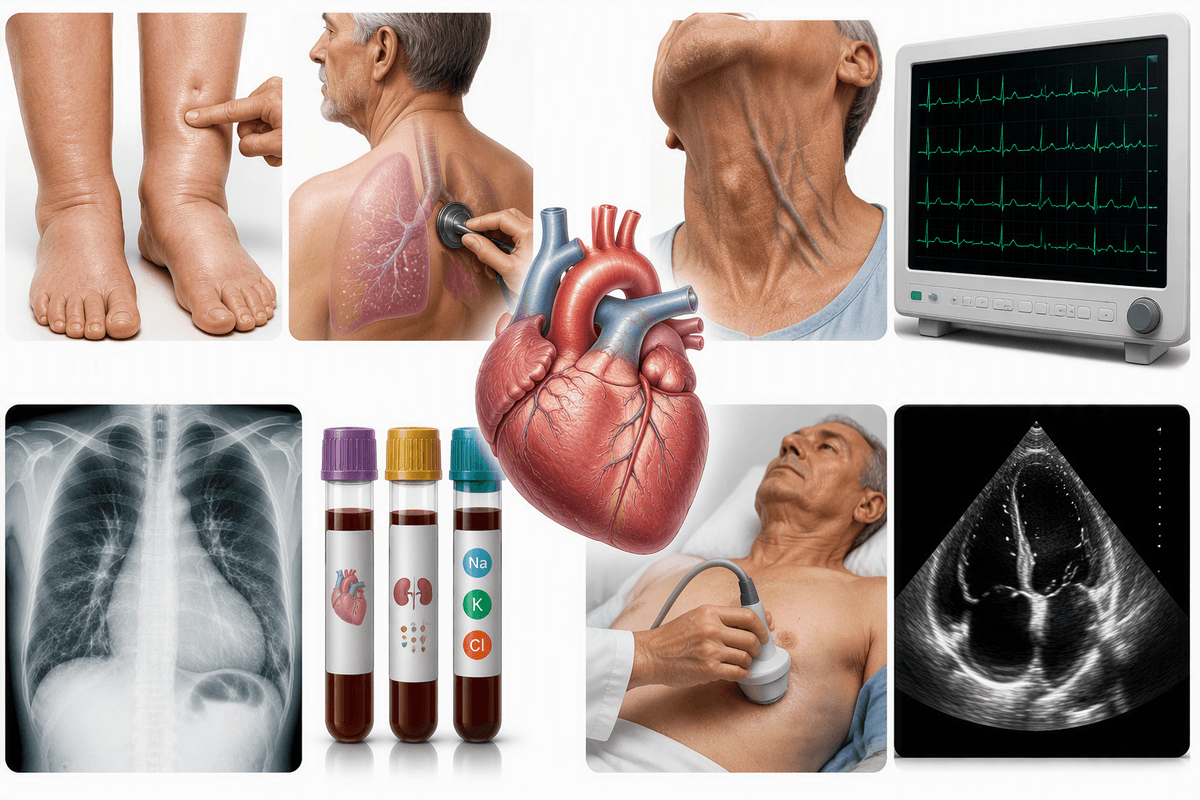
Sometimes the first “test” is embarrassingly simple: you sit on the exam table and realize you’ve been avoiding lying flat. Clinicians pay attention to that detail, along with blood pressure, heart rate, oxygen level, weight trends, and what they see and hear—leg swelling, crackles in the lungs, neck vein fullness, or a new murmur. None of these alone is perfect, especially if you happen to be having a “good day,” so they’re usually pieced together with a few targeted checks.
Blood work may look for strain signals (like BNP/NT-proBNP) and for the trade-offs of fluid and medications (kidney function and electrolytes). An ECG can show rhythm or prior damage, and a chest X-ray can hint at congestion. The anchor test is often an echocardiogram, which looks at pumping strength, relaxation, and valves. Severity is then judged less by one number and more by patterns: how far you can walk before symptoms, whether you’re retaining fluid, and how often things flare.
Treatment: balancing symptoms, protection, and trade-offs
The first time treatment really feels “real” is often logistical: you’re counting pills, noticing you need the bathroom more, or realizing a medication change made you a little lightheaded when you stand up. That push-and-pull is the core of heart-failure care. Some medicines are there to help you feel less congested—especially diuretics (“water pills”) that can bring breathing and swelling down quickly—but they can also leave you dry, crampy, or dizzy if the balance tips too far.
Other medications may not change how you feel that same day, yet they’re meant to protect the heart over months and years by easing strain and reshaping that “retain fluid to keep pressure up” loop. They can affect blood pressure, heart rate, potassium, or kidney labs, so doses usually move in small steps with check-ins. Even when the plan is solid, it can be inconsistent in real life: a salty weekend, a stomach bug, hot weather, or a missed refill can make the “right” dose suddenly feel wrong. Over time, many people do best when they treat symptoms and trends—weight, breathing, swelling—as shared data, not a personal failure.






![Best Cash Alternatives [Get Yield on Short-Term Investments]](static/image/2026/08/03/87e885cb-e070-4bb6-902b-704f3bb1fb84.png)