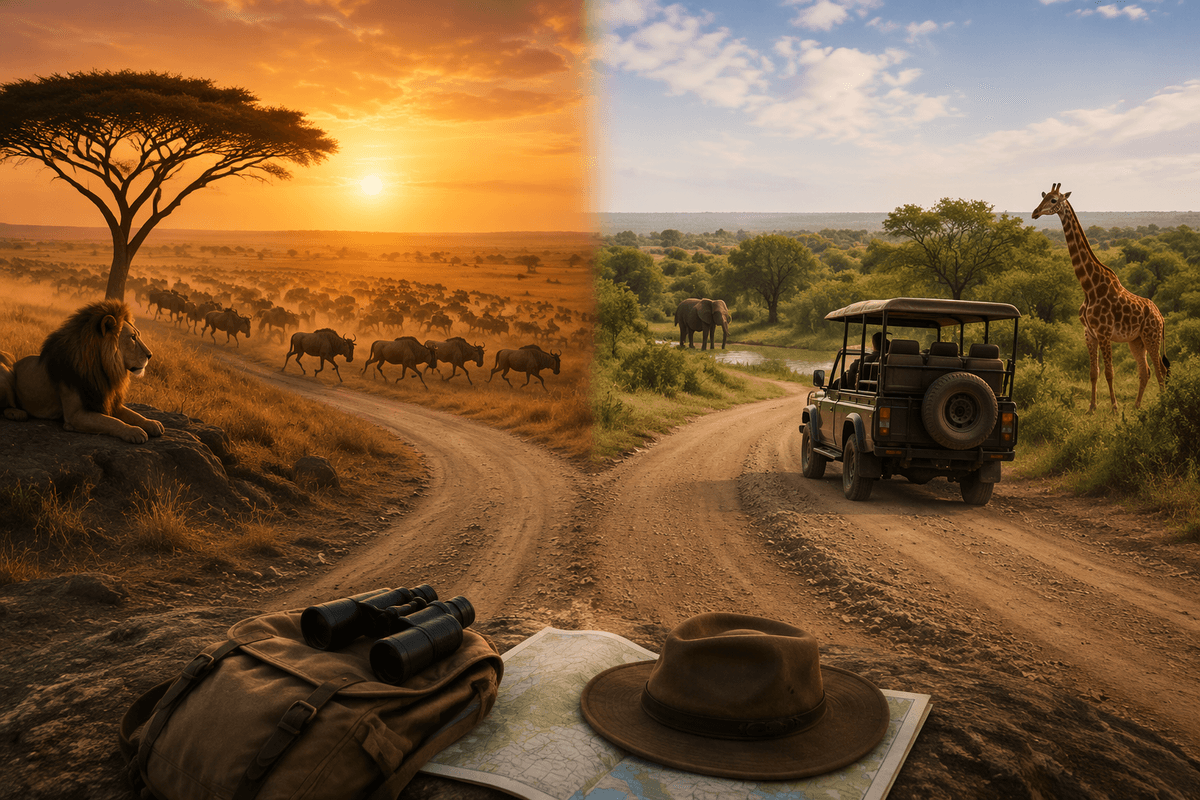
The real choice isn’t Kenya vs South Africa
I paused with two tabs open—“Masai Mara migration calendar” on one side and “Kruger gate times” on the other—while my spreadsheet kept flashing a red cell: “PTO: 10 days.” The map made Kenya and South Africa look like a clean fork in the road, but the friction showed up in smaller print: flight connections, early-morning drive blocks, and whether you want to spend your best wildlife hours behind a steering wheel.
The real choice usually isn’t country; it’s your operating system. Kenya tends to reward a fly-in, lodge-to-lodge rhythm—fewer logistical chores, more time parked at sightings, and a “big landscape” feel that can make a single lion sighting feel cinematic. The trade-off is medical prep (malaria prevention decisions aren’t fun vacation admin), plus crowd dynamics in the Mara during peak windows, when radios and vehicle clusters can turn “rare moment” into “shared event.” It works best if you’ll pay to compress time and reduce uncertainty.
South Africa, by contrast, can be easier to execute inside a tight PTO box: shorter flight paths, clearer road infrastructure, and the option to self-drive if you’re comfortable with left-side rules and gate-time pressure. The catch is cost transparency—park fees and private reserve rates can spike faster than expected, and self-driving saves money but spends energy. If you’re happiest trading a bit of wildness for control (and predictable nights), South Africa often wins that matchup.
Choose your headline wildlife moment
I hesitated at the “add to cart” moment for a Mara conservancy upgrade—an extra $300 per night on a sample quote—because the promise was vague: “exclusive sightings.” On my screen, the Kruger alternative looked less romantic but clearer: sunrise gate times, a known road loop, and a private reserve add-on with a set schedule. That little pricing toggle is where your “headline moment” quietly gets decided.
If your non-negotiable is a migration-style scene—big herds, open plains, and that classic “endless horizon” feeling—Kenya (Masai Mara, and often the surrounding conservancies) is the cleaner fit. The limitation is timing: outside peak windows, you can still get excellent cats, but you’re paying for the stage even if the cast isn’t all there. Inside peak windows, the trade-off is crowds; the same lion kill can feel like a press conference unless you’ve bought into areas that manage vehicle density more tightly.
If your headline moment is “reliable big cats, repeatedly, without burning a day on transfers,” South Africa—especially Kruger paired with a private reserve—tends to deliver with fewer moving parts. You give up some of the sweeping-wild aesthetic, and self-drive can turn into decision fatigue (route choices, speed limits, gate clocks) when you’re jet-lagged. Couples who want comfort and predictability usually like the private-reserve rhythm; couples who hate schedules often do better in the park—provided they’re okay earning sightings the hard way.
Decide how guided you want it
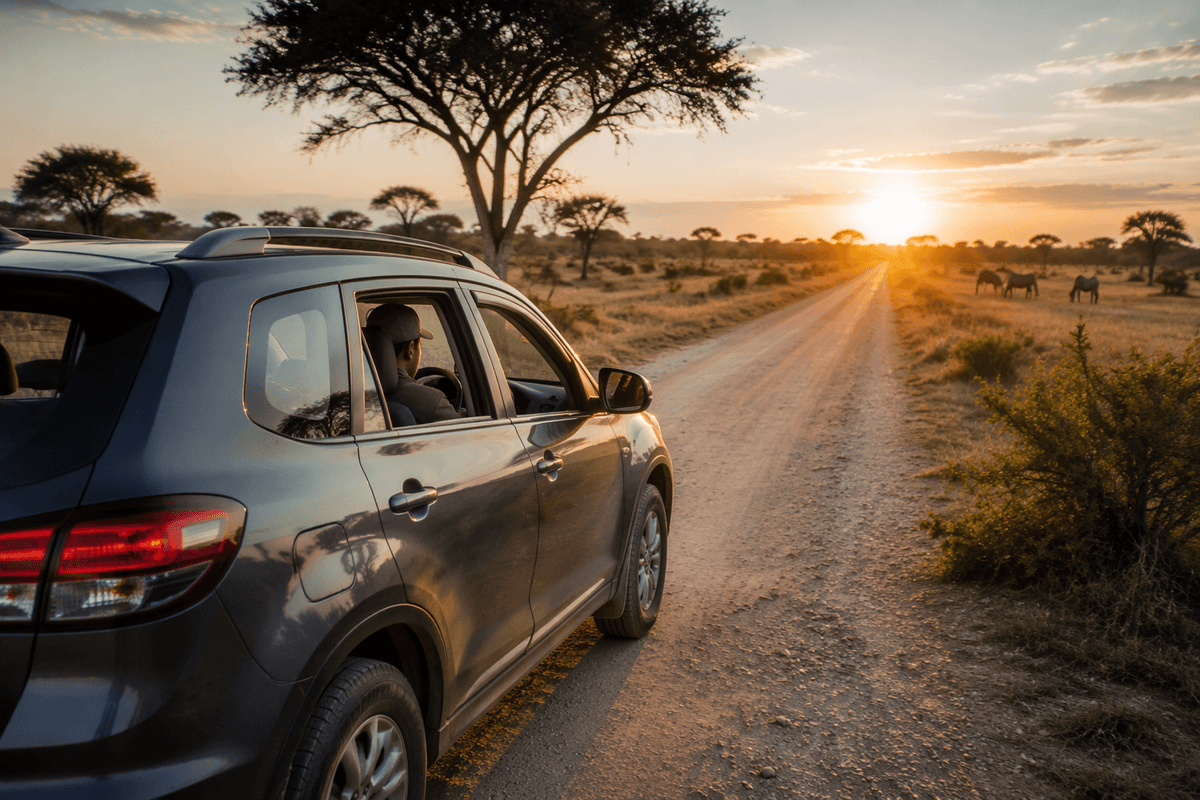
At 5:12 a.m., I stared at a lodge WhatsApp message—“depart 05:30, coffee at 05:15”—and did the math against my own habits: we’re not heroic morning people, we’re just scared of missing the best light. In Kenya that early start felt like a relief (someone else owns the timing); in South Africa it can feel like a negotiation with gates, road loops, and whether you trust yourself to drive calmly on the left while half-awake.
If you want maximum “eyes on cats” per day, being guided is usually the more efficient operating system. A good guide is basically a shortcut: they know which marsh line is holding lions, how to read fresh tracks, and when to leave a crowded sighting before it turns into a vehicle ring. You’re buying someone else’s decisions—great when you’re on 10 days of PTO, less great if you hate being told where to sit, when to stop, and when the sundowner happens.
South Africa gives you a clearer choose-your-own-adventure menu: self-drive in Kruger for control and cost, then “buy back” ease with 2–3 nights in a private reserve when you’re tired of route planning. Kenya is more binary: self-drive is possible, but the friction (road conditions, navigation, and long transfer blocks) can chew up the same hours you flew there to protect. For spreadsheet planners, the decision cue is simple: if you’d pay to remove variables, go guided; if driving feels like part of the fun, earn it in Kruger and spend the savings on one private-reserve reset.
Plan what you’ll do between drives

At 2:40 p.m., we rolled back through the gate dusty and weirdly wired, and the lodge room suddenly felt too quiet. The plan had been “nap, then sundowner,” but our phones were already filling with photos to triage, batteries to charge, and the small question of whether we could face another 5:00 a.m. start. That between-drives block is where a trip either feels cushy—or like an endurance event with nice sheets.
In Kenya, the trade-off is simple: if you’ve paid to fly in and be guided, protect your downtime like it’s part of the package. A lodge with a real view (not a parking area) matters more than you think when midday heat slows sightings anyway, and it works best for couples who like reading, journaling, or just watching the river instead of “doing activities.” Many camps are intentionally remote; if you’re craving a spa menu or a town stroll, your options can feel narrower than the price tag suggests.
South Africa’s in-between time can be more flexible, especially around Kruger where you can swap a long drive block for a shorter loop and still be back before the gate clock turns stressful. The comparison point is energy management: self-drive gives you freedom, but it also tempts you to “just keep going,” which is how you end up cranky by day three. If you’re the type who needs a non-wildlife reset, budget for 1–2 nights in a private reserve (or a nicer rest camp) specifically to stop decision-making—then go back to earning sightings with a clearer head.
What I’d pick for your week
The week I’d actually book, I’d be staring at a flight that lands in Johannesburg at 4:55 p.m. and asking one annoying question: do we really want to drive after dark on day one? That tiny timing constraint is why I’d bias toward a plan that front-loads ease, not ambition. If you only have 10 days of PTO, protecting your first two mornings matters more than squeezing in one more park.
For a US$4–6k pp couple prioritizing reliable big-cat time and comfortable beds, I’d pick South Africa as the default: 4–5 nights split between a private reserve (2–3 nights) and Kruger self-drive (2–3 nights), then 2 nights somewhere genuinely restful (Panorama Route or Cape Town, depending on your flight tolerance). The trade-off is you swap some “endless plains” drama for logistics that behave: fewer connection points, clearer road rules once you’re awake, and a budget you can actually keep inside a spreadsheet. It doesn’t work as well if you’ll resent gate clocks or if driving feels like unpaid labor.
I’d only pivot you to Kenya if your headline is “classic Mara” and you’re willing to pay to compress variables: fly into the Mara, stay in (or bordering) a conservancy for 4 nights, then add a soft landing night in Nairobi before you fly home. You’re buying time-on-sightings and that big-landscape feeling; you’re also accepting malaria-prep admin and the chance that peak-season crowds make a kill feel less private than you imagined. If you’re still torn, choose the version that leaves you with one fewer “must-happen” morning—fatigue is the sneaky budget killer.







![Best Cash Alternatives [Get Yield on Short-Term Investments]](static/image/2026/08/03/87e885cb-e070-4bb6-902b-704f3bb1fb84.png)