You need cash today, but the check’s awkward
The check is in your hand and the need is immediate—rent due, phone about to shut off, a ride waiting outside. But it’s not a clean “walk in and get cash” moment. Maybe it’s from a new job, an insurance payout, a tax refund, or a friend’s business. The amount might be larger than what a store likes to handle. Your ID might be expired, the name might not match exactly, or the check looks “too new” for anyone to trust. And every place you try adds a new rule, a new fee, or a new delay.
That tension—speed versus getting turned away—is what decides the smartest path. The quickest option is not always the one that actually pays out today, and the cheapest option often comes with holds. Before picking a counter to stand in line for, it helps to treat this like a short sequence: make sure the check can be cashed, then choose the place least likely to reject it.
Before you go anywhere, make the check “cashable”
The fastest way to lose half a day is to walk in with a check that fails the first basic test. Before you leave, look at it like a clerk will. Is it signed? Is it dated, and not postdated? Is the amount written clearly in both boxes? Any white-out, scribbles, or “void” marks can get it refused on sight, even if it’s legitimate. If the name on the check doesn’t match your ID exactly—middle initial missing, hyphen, old last name—assume you’ll get pushed to the back of the line or turned away.
Then do the small fixes that prevent big stalls. Endorse it only when you’re at the counter, because some places won’t accept a pre-signed check. If it’s from an employer or business you can reach, ask them to confirm the check is “live,” and to be ready to verify it by phone—many cashing places won’t proceed without that call. Finally, know what you can prove: a current photo ID is usually non-negotiable, and having a second item (pay stub, bill with your address) can be the difference between “no” and “come back later.”
Try the check’s issuing bank for lowest friction

Once the check looks clean, the lowest-drama place is usually the bank printed on the front. They’re the ones holding the account, so they can see whether funds are available and whether the check number matches what they issued. That doesn’t mean they’ll hand over cash no questions asked, but it’s often fewer moving parts than a retailer trying to “score” the check through a third-party system while you stand there watching the clock.
Go in expecting a gatekeeper: a teller who wants to match your ID, confirm the payee name, and decide whether the check feels normal for that account. Ask, plainly, “Can you cash this check drawn on your bank if I’m not a customer, and what’s the fee?” Some banks will cash it for non-customers with a fee, some will limit the amount, and some will push you toward opening an account. If they offer a free alternative like a cashier’s check, remember that still doesn’t solve “cash today” unless you have another place ready to cash that replacement.
Timing matters here. If it’s late afternoon, a larger check can turn into “come back tomorrow” because the person who can approve an exception is gone, or because they won’t release that much cash before end-of-day. If you’re close to a branch, it’s still the first stop worth making—especially before paying a percentage fee somewhere else.
Retail cashing can work, until it doesn’t
After the issuing bank says “no” or “not today,” the next instinct is a big retailer—Walmart, a grocery chain, a pharmacy—because the fee is usually flatter and the hours are better. On a good day, it’s quick: they run the check through their system, match your ID, and hand over cash with a receipt. But retail check-cashing is a policy machine, not a judgment call, and the machine doesn’t care that you’ve got rent due in two hours.
The first snag is the check itself. A larger amount, a handwritten check, a new employer, an out-of-state bank, or anything their system can’t confidently “score” can trigger a decline with no real explanation. Then it becomes a timing problem: the cashier can’t override it, a manager may not be available, and some stores cap how much cash they’ll hand out late in the day. Even when they’ll take it, they may insist on specific ID, refuse an endorsement that’s already signed, or require the check writer to answer a verification call that goes to voicemail.
If you try retail, go in expecting a binary result. Bring your best current photo ID, keep the check unendorsed until the counter asks, and have one backup plan ready—because “we don’t cash that kind” can happen in under 30 seconds, and it usually ends the attempt on the spot.
Check-cashing stores: fastest cash, highest exposure
After retail spits out a decline and the issuing bank isn’t an option, the check-cashing place starts to look like the only door still open. They’re built for “cash right now,” and they’ll often take checks that a big-box system won’t touch. The trade-off shows up immediately: a percentage fee instead of a flat fee, plus possible add-ons that don’t feel optional when you’re already at the window. On a $900 check, even “just” 3% is real money gone, and some shops won’t quote the total until they’ve run it.
This is also where the exposure goes up. You’re handing over your ID, phone number, address, sometimes a fingerprint, and you’re doing it in a setting where mistakes cost you—endorsing too early, leaving without a receipt, or not noticing a “membership” fee folded into the paperwork. Some locations will push a prepaid card payout instead of cash, which can tack on ATM fees and balance fees later, right when you’re trying to stretch the dollars.
If you use one, treat it like a controlled transaction: ask the total fee in dollars before you sign anything, confirm whether it’s cash or card, and don’t hand over the check until the numbers make sense.
Prepaid cards and deposit apps: cheaper but slower
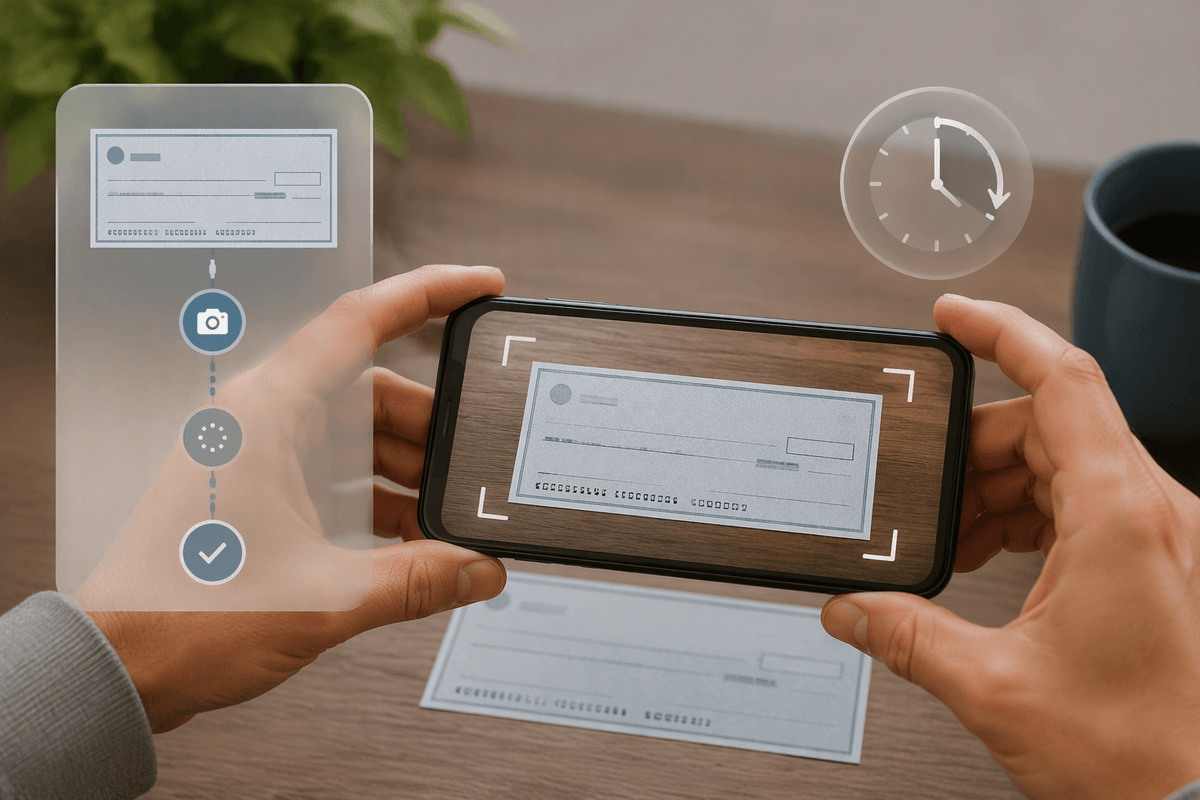
When the percentage fee at the check-cashing window feels like robbery, the next “less painful” option is usually a prepaid debit card or a phone deposit app. The pitch is simple: take a picture of the check, wait for approval, then spend or pull cash later. The friction is timing. Even when the app accepts the check, the money often isn’t usable in the next hour, and “instant” availability—if it’s offered—can come with its own fee and still exclude certain checks.
This route works best when the emergency is real but not minute-by-minute. You still need clean ID, a name match, and a check that scans well; payroll checks usually go smoother than handwritten personal checks. Expect a hold if it’s a larger amount, a new check writer, or your first deposit with that service. And don’t ignore the second layer of cost: once funds land on a prepaid card, cash access can mean ATM withdrawal limits, out-of-network fees, and a runaround if the card’s customer service flags the deposit.
If you try it, protect yourself like you would at a counter: endorse only when the app tells you to, keep the paper check until the deposit fully clears, and plan where cash would come from afterward—ATM, cash-back purchase, or bill paid directly from the card—because “cheaper” doesn’t help if the money is trapped until tomorrow.
When cashing keeps failing, consider a low-cost account
After a couple of “declined” screens and a check-cashing window quoting a percentage fee, the math starts to flip. Paying $25–$60 just to touch your own money feels worse when there’s still a chance they’ll find a reason to say no. This is the point where opening a low-cost account stops being a “someday” task and becomes a way to make the check someone else’s problem—because a deposit is easier for banks to accept than a cash-out on the spot.
The constraint is time. Many new accounts can be opened the same day, but a first deposit can come with a hold, especially on larger checks or brand-new check writers. Still, even with a hold, you’re often trading a one-time delay for avoiding repeat fees and repeat rejections. Ask directly before you commit: what ID they accept, whether a payroll check gets faster availability, the minimum opening deposit, and whether there’s a monthly fee you can realistically avoid.
If a traditional bank makes it hard, look for a local credit union or a “second chance” style checking option. The goal isn’t a perfect account—it’s a cheap place where this check can land safely, clear, and then turn into cash or bill payments without paying a percentage every time you’re under pressure.
Choose your next step, then protect your money
By now, the decision is less about “best option” and more about what can still work today. If the issuing bank will cash it with your current ID, take that path and keep the fee question on the table before you endorse. If the clock is tighter than the fee, a check-cashing store may be the only same-hour answer—just get the total cost in dollars, not a percentage, and don’t accept a prepaid payout unless you already know where you’ll withdraw without getting hit twice.
Once you get paid, slow down for five minutes. Count the cash before leaving the window, keep every receipt, and take a photo of the check and the transaction slip. Don’t hand anyone your PIN, don’t let a “helper” walk you to an ATM, and don’t sign anything you can’t keep a copy of. If anything feels off, leave with the check unendorsed and try the next place.