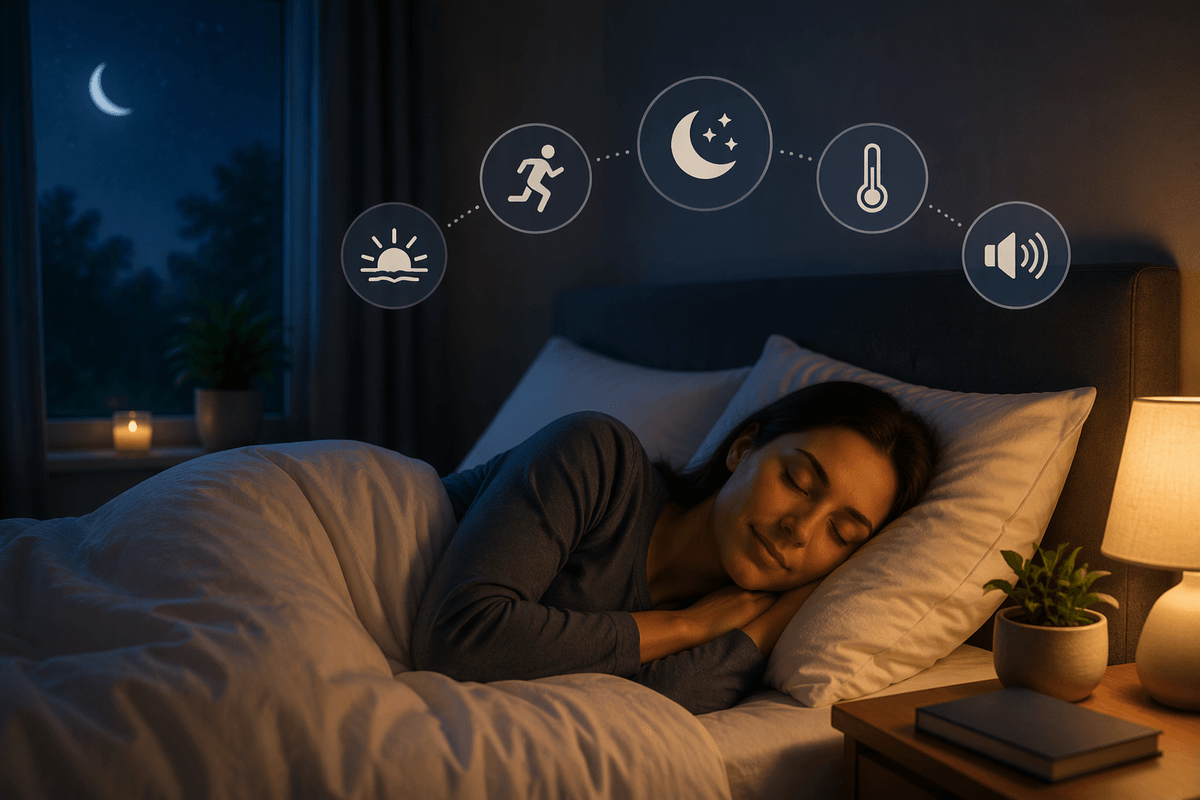
Why sleep effort backfires more than people expect
It often starts with a perfectly reasonable move: you get in bed earlier to “catch up,” and instead you’re staring at the ceiling, listening for sleep like it’s a sound you might miss. The room is quiet, your body is tired, yet your mind keeps checking—how long has it been, what time is it now, what if tomorrow is wrecked. That extra effort can turn the bed into a place where attention sharpens rather than softens. And because sleep isn’t something you can force on command, every minute of trying can feel like proof it’s not working.
In busy weeks, this backfire is easy to misread. You may add more time in bed, cut daytime movement, or “save” energy, expecting it to translate into deeper sleep. Sometimes it does the opposite: less sleep drive builds, and the small stress of monitoring sleep adds a layer of alertness. If the pattern repeats, the hardest part isn’t being tired—it’s learning that trying harder isn’t always the lever that moves sleep.
Your circadian clock sets sleep timing boundaries
Some nights the problem isn’t that you’re “not tired enough,” it’s that your body seems to reject the timing. You climb into bed at 9:30 because tomorrow is packed, but you feel oddly awake—then, on a weekend, you can fall asleep fast at 11:30 and wonder why you can’t just do that every night. That’s the circadian clock showing its edges: it creates a daily window where sleep comes more easily, and outside of it you may feel wired even with heavy eyelids.
This is why early waking at 3–4 a.m. can be so confusing. People often blame the mattress, dinner, or “light sleep,” when the bigger pattern is timing drift—late light, late nights, or irregular wake-ups nudging the clock later while obligations keep the alarm early. The result can be a split night: sleepy at the wrong times, alert at the wrong times, and frustrated because it looks like a willpower problem when it’s more of a scheduling boundary inside the body.
Sleep pressure builds from wakefulness and activity

By late afternoon, you can sometimes feel it as a dull heaviness behind the eyes—then it oddly fades after dinner, like you got a “second wind.” Many people read that as proof they aren’t tired, when it’s often just sleep pressure being temporarily masked by light, movement, conversation, or the mental push to finish the day. Sleep pressure is the body’s plain accumulation of time awake, and it tends to build more reliably when the day includes steady activity rather than long stretches of sitting and short naps that blur the edge of sleepiness.
This is where “going to bed early” can quietly fail. If the day was spent conserving energy, dozing on the couch, or sleeping in to recover, the pressure to sleep at night may not be high enough to carry you through. Then you get a night that feels light, with more time awake in the first hour or a familiar pop-up at 3–4 a.m. The pattern can look random, but it often follows the shape of the day.
Evening arousal hides in normal modern habits
It can feel like you’re doing everything “right” until you notice your shoulders are still up around your ears while you brush your teeth, or you’re answering one last message in the dark hallway. Nothing about it reads as stress—just normal life continuing right up to bedtime. But that low-level activation matters. A fast scroll, a tense show, a half-finished work problem, even an emotionally loaded conversation can keep the nervous system in “ready” mode while your schedule insists it’s time to shut down.
This is why wired-but-tired evenings are so common: the body is carrying sleep pressure, yet arousal is quietly propping your alertness open. Caffeine that felt harmless at 2 p.m., alcohol that seemed to “take the edge off,” late exercise, or bright kitchen and phone light can all blur the transition into sleepiness. Some nights you’ll fall asleep anyway, which makes the habit look innocent, until it lines up with a tougher day and suddenly you’re awake at 3:17 a.m., mind sharp, body tired, wondering what changed.
Light, temperature, and noise shape sleep depth
You might not notice it until you get up to use the bathroom and the hallway light hits your eyes like a small jolt. Even if you fall back asleep, the rest of the night can feel thinner—more dreaming, more twitchy turning, more “almost awake” moments. Light is a strong cue for the brain, and it doesn’t have to be dramatic; a bright phone screen, an uncovered streetlight, or a TV glow can quietly push your system toward morning mode, especially in that 3–4 a.m. stretch when sleep is already lighter.
Temperature and sound can do something similar: not always waking you fully, but shaving off depth. A room that starts cool but warms up under heavy bedding, a partner who runs hot, a compressor clicking on, a neighbor’s car door—each one can trigger tiny arousals you don’t remember. The same noise is “fine” one night and disruptive the next, depending on how much pressure and calm you brought into bed.
A reasonable routine can create new sleep anxiety
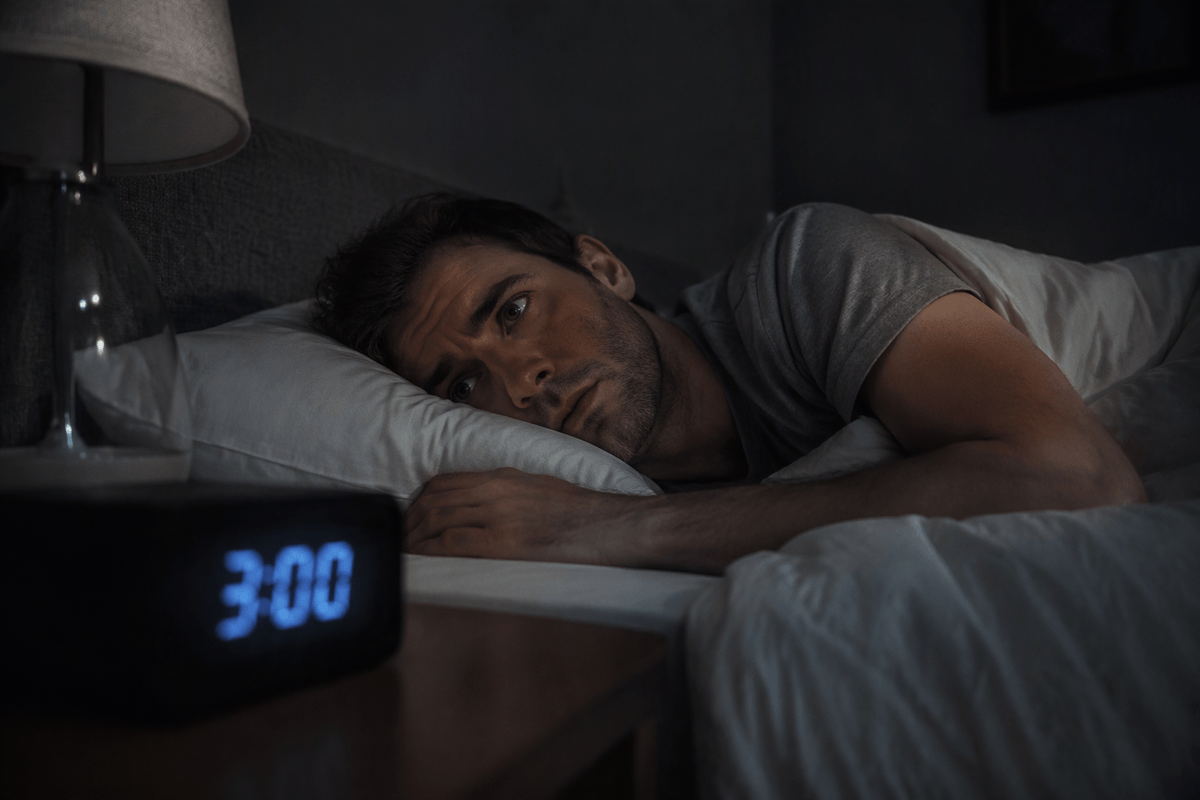
It can show up in a small flinch: you finish your nighttime routine and suddenly feel more alert, not less. The checklist is done—shower, tea, dim lights, no screens—so your brain starts watching for the payoff. If sleep doesn’t arrive quickly, the routine can turn into a scoreboard. “I did everything right, so why am I still awake?” That question carries its own energy, and it often lands hardest in the first 20 minutes in bed or after a 3:00 a.m. wake-up, when the room is quiet enough for your mind to get loud.
This is the trap of a “reasonable” plan becoming a fragile rule set. When bedtime becomes performance, you may start protecting it: skipping evening plans, rushing family time, or repeatedly checking the clock to see whether the routine is “working.” The routine itself isn’t the problem—it’s the way it can condition the bed into a place where you evaluate, troubleshoot, and rehearse tomorrow. Over time, that extra vigilance can feel like the most reliable thing in the room.
Small adjustments work best when layered consistently
Somewhere around midafternoon, you may notice the familiar bargain forming: “I’ll fix this tonight.” It usually starts with a bigger move—an earlier bedtime, a strict no-screen rule, a new supplement—because the last few nights felt so bad. But sleep tends to respond better to smaller signals that repeat, especially when life stays messy. One night of changes can feel like it should reset everything; instead it can create more watching, more guessing, and more pressure to prove the plan works.
Layering is quieter. A steadier wake time most days, slightly earlier light in the morning, caffeine that ends a bit sooner, a gentler off-ramp from work messages, dimmer lights in the hour before bed—each one alone may feel too minor to matter. Together, over a couple of weeks, they can pull timing, pressure, and arousal back into the same lane. You may still have a 3:30 a.m. wake-up here and there, but it stops feeling like a total restart and more like a bump in a trend.