The real question: Zanzibar or somewhere else?
The cursor hovered over “Book now” while the rain tapped the kitchen window in London, and I kept flipping between Zanzibar and Mauritius on two tabs. One flight was cheaper but longer; the other looked smoother but pricier. The sticking point wasn’t “will it be pretty?”—it was whether eight days could handle beaches and culture without spending half the trip in transit.
Zanzibar is the better choice if you want your beach time to come with an actual town you can wander—Stone Town gives you history, food, and night energy that a pure resort island can’t fake. The transfers are slower than they look on a map, and where you base yourself matters more than in the Maldives, where the resort bubble does the logistics for you. It works brilliantly for couples who can tolerate a bit of negotiating taxis and timing ferries; it’s a poor fit if you want everything pre-paid, punctual, and insulated.
Weather timing is the quiet deal-breaker. Zanzibar’s seasons can be excellent, but you’re gambling more than with a year-round “easy mode” destination, and humidity plus sudden showers can turn a long transfer into a slog. If you go, plan a simple split—2 nights Stone Town (front-load the walking) and 5–6 nights on one beach base—so you’re not burning daylight hopping coasts just to chase a prettier Instagram bay.
Stone Town’s layered history and culture
At 9:40am I paused at the edge of the Old Fort, phone map insisting the next alley was a “road” while a handcart and a scooter argued over the same two feet of space. The air had that clove-and-diesel mix, and I realised Stone Town isn’t something you “see” so much as you squeeze through. Compared with the clean choreography of a resort island, it’s messier—and that’s the point.
What lands here is the layering: carved wooden doors that look almost theatrical, a mosque call cutting across a Catholic spire, balconies that feel more Omani than East African, then a sudden courtyard where someone’s just hanging laundry. It works best for couples who like slow looking and don’t mind walking with purpose; it’s less rewarding if you want big-ticket sights laid out like a museum circuit. Timing is the limiter: midday heat makes the lanes feel tighter, and the same “quick” 20-minute stroll can stretch when you’re dodging crowds, stopping for photos, or negotiating a guide who’s a bit too helpful.
For an eight-day trip, give Stone Town two nights and treat it like a front-loaded city break: early morning wandering, a shaded history stop, then save your energy for sunset and dinner. Stay somewhere you can walk to Forodhani Gardens so you’re not relying on taxis at night, and be politely firm on prices before anything starts—Stone Town rewards curiosity, but it punishes vague plans.
Beaches that change with your base

I learned the “same island, different beach” lesson when I checked the tide chart at 4:15pm outside a guesthouse in Jambiani and realised the sea had simply… left. The sandbar was gorgeous, but my mental picture was a quick dip before dinner. Ten minutes later a couple from our taxi said they’d just come from Kendwa, where they’d been swimming all afternoon. Same day, wildly different experience.
Your base decides what “beach time” even means. The east coast (Paje/Jambiani) is breezier and better for long walks and kitesurfing, but the tidal swing can turn swimming into a timed appointment—great if you like routines, annoying if you want spontaneous dips. The north (Nungwi/Kendwa) tends to feel more “always-on” for swimming and sunset bars, closer to the resort rhythm you’d get in Mauritius, though it can be busier and pricier for the same room standard.
The hidden cost is transfer fatigue: a beach that looks 45 minutes away can eat a half-day once you add traffic, speed bumps, and a driver who “just needs to stop quickly.” If you want snorkelling without planning your week around it, being nearer the north-east (Matemwe side) makes Mnemba-style trips easier; if you want quieter evenings, the far south can feel calmer but less convenient. Pick the trade-off you’ll actually enjoy at 7pm, not the one that photographs best at noon.
Spice, seafood, and sunset markets
At 6:22pm I was standing shoulder-to-shoulder at Forodhani Gardens with a paper plate that was already going soggy, watching a row of grills flare up as the sky went orange over the harbour. I hesitated over the “Zanzibar pizza” queue because it moved like airport security—slow, surging, then suddenly fast when someone gave up. A guy next to me swore it was worth it; my stomach, after a hot day in the lanes, wasn’t fully convinced.
Forodhani is the easy win if you want atmosphere without committing to a full restaurant, but it’s not the Maldives-style “romantic seafood dinner” script—more noisy, more smoky, and more transactional. You can try sugarcane juice, grilled octopus, samosas and mishkaki in one loop, yet you’ll eat standing up, dodging elbows and the occasional over-friendly “guide” offering to “help” you order. It works best if you go early (before the heaviest crowds) and treat it like grazing; less so if you’re craving a calm, linen-tablecloth meal.
Spice-wise, the island’s best flavours aren’t always on a spice tour timetable. A simple Swahili curry or a seafood plate with lime and pili pili can feel more “Zanzibar” than buying vacuum-packed cloves for your suitcase, and prices swing fast depending on where you sit—Stone Town waterfront menus can be Mauritius-money for a view. If you’re splitting an eight-day trip, use Stone Town for one big sunset-food evening, then let the beach nights be lighter: fresher, cheaper, and easier on your patience.
Easy adventures off the main island
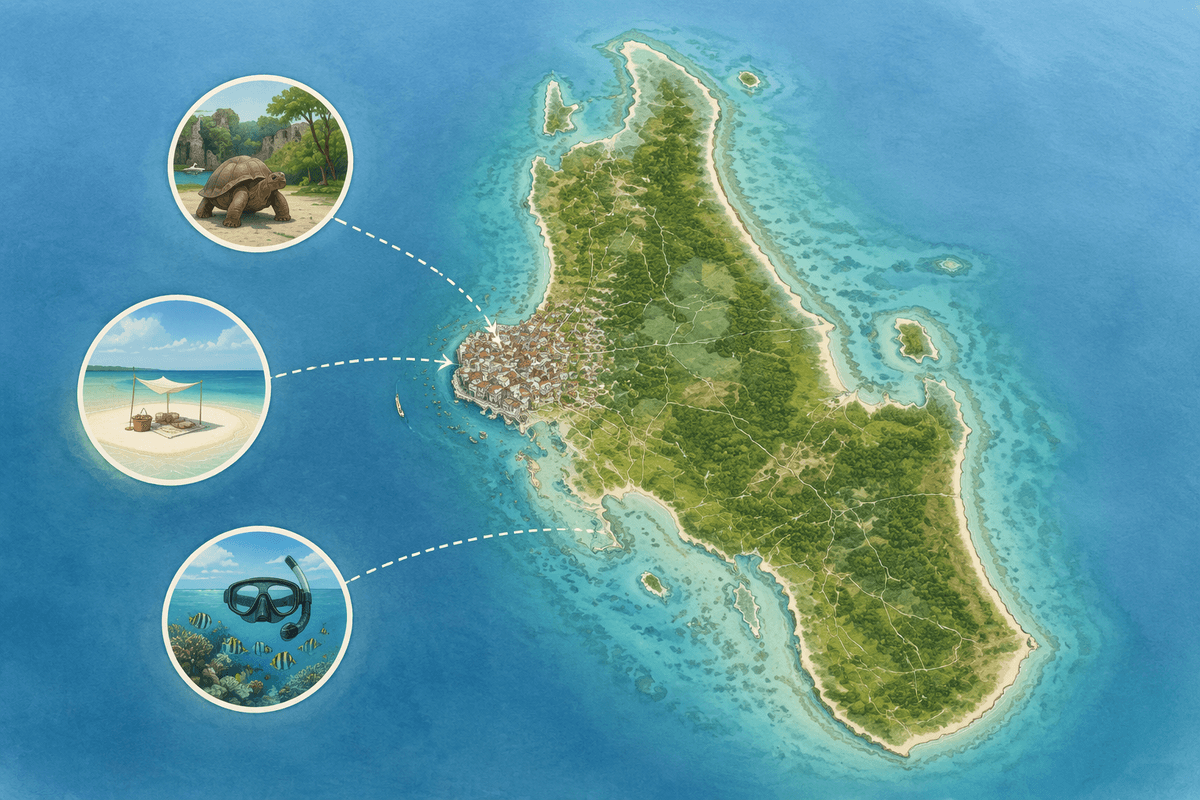
The day we tried to “just pop over” to Prison Island, the queue at the harbour had already doubled by 10:15am, and the sun was doing that bright, unhelpful thing where everything looks closer than it is. A skipper waved a laminated price list that somehow didn’t include our boat, then suggested we wait “five minutes” that became twenty. It wasn’t a disaster, but it was a reminder that Zanzibar’s easy trips are easy only if you start early and agree the deal before you step off the stone steps.
From Stone Town, the short-hop classics—Prison Island for the tortoises, a sandbank picnic, a half-day snorkel—scratch the “adventure” itch without stealing a whole beach day, especially if you’re comparing it to Mauritius-style day tours that run like clockwork. Some operators are brilliant, some are vague, and weather or chop can turn a romantic dhow idea into a bouncy endurance test. If you’re the kind of couple that likes a plan but not a spreadsheet, booking through your hotel (even if it’s a touch pricier) can be worth it for not being haggled into confusion at the waterfront.
If you’re based up north or north-east, Mnemba-area snorkelling trips are usually the cleanest win: clearer water, less time in traffic, and you’re back in time for a proper shower before sunset. South or far east can feel calmer for beach days, but it makes “quick” excursions longer, so pick one standout trip and protect the rest of your hours. If you’re already tired from Stone Town walking, choose the half-day option and keep the afternoon for doing nothing on purpose.
My quick test: should you go?
On our last morning, I stood at the hotel desk at 7:05am with a half-packed day bag, hesitating over one question: Stone Town again, or straight to the beach? The receptionist said the driver could be “here soon,” which in Zanzibar time can mean ten minutes or the length of a full coffee. That small wobble—plans feeling nearly set, then suddenly elastic—was the clearest preview of who the island rewards.
Go if you want a two-part trip: a real, walkable old town plus warm-water downtime, and you don’t mind light logistics (cash, price checks, a bit of bargaining) to earn it. Compared with Mauritius, Zanzibar can feel less polished per pound spent; compared with the Maldives, it’s far more alive outside your room, but you won’t get that sealed, pre-paid smoothness. It works for couples who can laugh off minor inefficiency; it’s a mismatch if you need punctual transfers, fixed menus, and zero hassle.
My quick test: if you can commit to 2 nights in Stone Town (early starts, shade breaks, one Forodhani graze) and then 5–6 nights in one beach base without “just checking” a second coast, you’ll probably love it. If your dates sit in the heavy-rain windows and you’ll resent losing a day to weather-plus-traffic, pick the easier island and save Zanzibar for when you’ve got slack. If you do go, book the flights early, then simplify everything else.