Day 1: Gaudí Masterpieces and El Born Tapas
The first choice hit before we even landed: chase every “must” or protect the pace so we didn’t spend half the weekend in lines. Barcelona rewards the latter. With 48 hours, the city isn’t hard—it’s efficient only if you accept that one or two icons get timed tickets and everything else has to orbit them, not compete.
For a style-conscious long weekend, we treated Gaudí as the anchor (booked early, non-negotiable) and kept the rest intentionally street-level: neighborhoods, tapas, viewpoints, and one market stop if it fit the route. Museums can be great, but they’re time sinks when you’re also juggling reservations and daylight. The metro is fast, taxis are even faster when your outfit (or feet) is done—just don’t ping-pong across town; Barcelona punishes zigzags.
Day 2: Gothic Quarter Strolls and Montjuïc Sunset
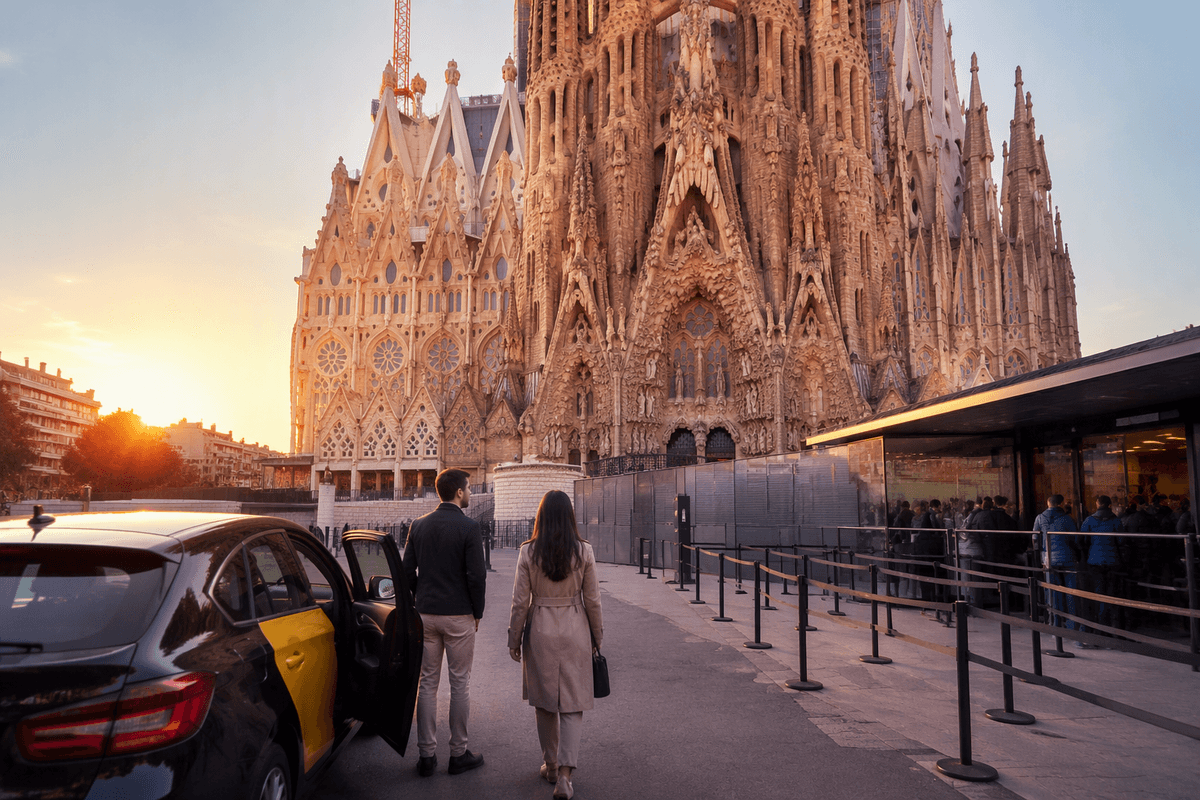
Our first real decision came with a clock attached: do Sagrada Família at opening, or try to “ease into” the day and risk a midday crush. We booked the earliest timed entry we could live with, then built everything else around that fixed point—because once you miss your slot, you don’t just lose the basilica; you lose the whole day’s rhythm. Getting there by metro is straightforward, but we chose a short taxi from the center to avoid the small friction of transfers and arrive calm (and not already overheated) for security lines that move, but never feel instant.
Inside, it’s the rare icon that earns the time: the light shifts quickly, and a “quick look” turns into an hour without you noticing. That’s why we resisted stacking a long museum block right after—your attention is already saturated, and museums are where a 48-hour plan quietly dies. Instead, we did a slow walk down to Eixample for coffee and a sit-down lunch, which cost more than tapas but bought us energy and posture for the afternoon.
Park Güell stayed optional on purpose. It’s beautiful, but it’s also uphill, timed, and a bit out of the way—great if you’re still springy, annoying if you’re already counting steps. If you go, do it mid-afternoon with a taxi up and public transit back; if you skip, you’ll have more room for street time and a better-looking evening.
Essential Barcelona Travel Tips
By the time we changed for dinner, the question wasn’t “where’s the best tapas,” it was how far we were willing to travel for it. We kept night one tight in El Born because it behaves like an evening—walkable, good-looking, and flexible when your earlier timings drift. The lanes around Passeig del Born and the pocket plazas reward a slow loop, but they also punish indecision: the prettiest terraces fill early, and the tiny kitchens mean waits spike fast if you show up hungry at peak.
We treated tapas like pacing, not a scavenger hunt: one solid anchor spot to sit (even if it’s slightly pricier), then a second, quicker stop if we still had momentum. It cost less in transit and more in discipline—skipping the “one more bar” urge that turns into 45 minutes standing shoulder-to-shoulder.
If you want a cocktail bar, do it as a capstone, not a mission. A single, well-made drink in a quieter room feels glamorous; bouncing around hunting for the “best” one feels like losing the night. We didn’t touch clubs—queues are a time tax, and in a 48-hour weekend, that’s a bad exchange.
Day 2 AM: Old Barcelona hits | Must: Gothic Quarter lanes | Opt: La Boqueria | Skip: souvenir streets
Day two started with a small gamble: do we chase breakfast at a “famous” place, or use the cool morning to get lost on purpose. We chose the Gothic Quarter early, before the lanes turn into a slow-moving photoshoot. The streets are narrow enough that crowds don’t just “add energy”—they stall you, and suddenly you’re late to everything else. We entered from the cathedral side and let the route zigzag toward Plaça Reial, treating it like a moving coffee walk: a quick cortado when we saw an open table, not a half-hour sit that would turn the morning into one long queue.
La Boqueria is worth it only if you accept what it is: a busy market with excellent ingredients and a lot of people trying to eat them at the same time. If you’re craving a market breakfast, go early and keep it light—fruit, jamón, something you can finish standing—because the seating crunch makes a “brunch moment” feel tense. If you arrive closer to midday, it’s still fun to look, but it’s no longer efficient.
What we actively avoided were the souvenir-heavy arteries off La Rambla. They look like shortcuts on a map, but they’re slow, repetitive, and weirdly draining. In 48 hours, the better flex is ducking back into the side streets—even if it’s less direct—so you spend your time on texture, not transactions.
Day 2 PM/Night: sea to skyline | Must: Montjuïc sunset | Opt: Barceloneta swim | Skip: midday beach heat
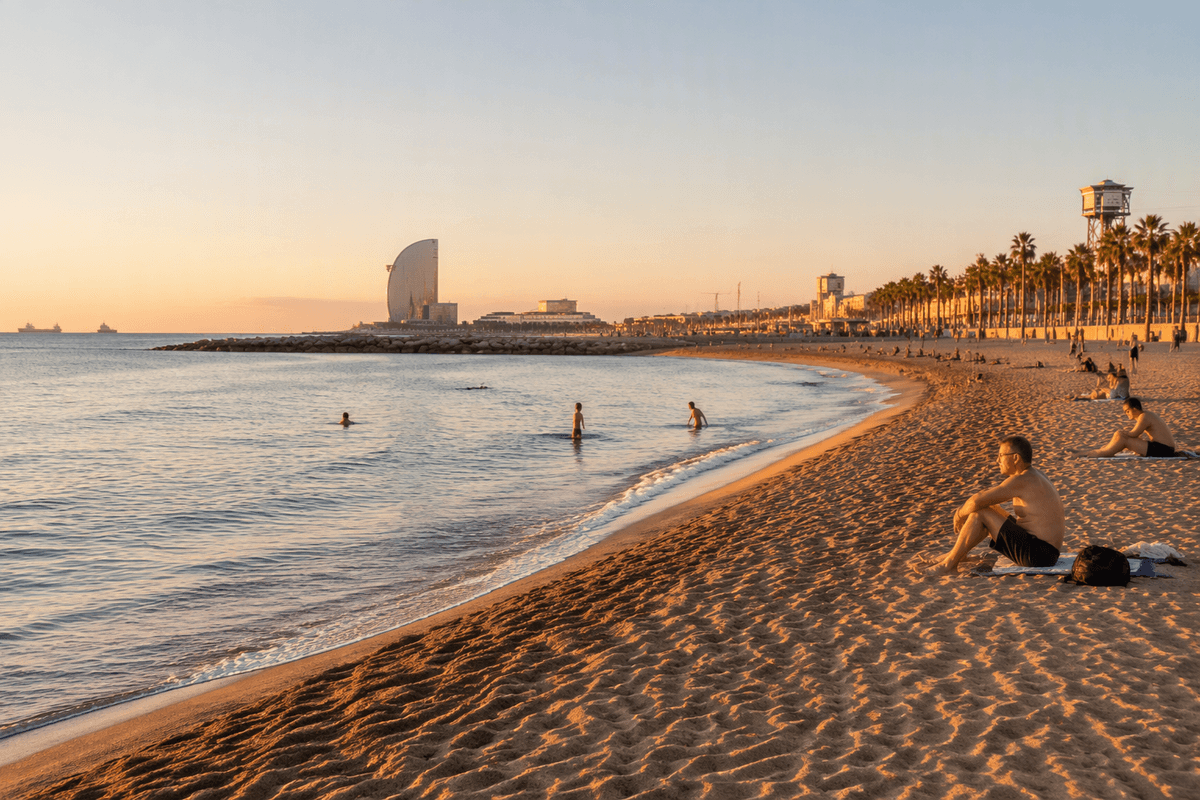
After lunch, we hesitated at the map: beach first, then Montjuïc, or the other way around. Midday Barceloneta looks like the obvious Barcelona move, but it’s also when the sand is hottest, the promenade is slow with bodies, and a “quick dip” turns into an unplanned two-hour reset—hair, sunscreen, wet clothes, the whole thing. Instead, we aimed for the sea later, when the light gets softer and the walk feels less like an obstacle course.
If you really want a swim, keep it tightly framed: go late afternoon, bring only what you need, and accept that the water-to-dinner transition is the tricky part (especially if you care about looking put-together). We treated it as optional—not a headline—because the moment you start hunting for the perfect beach spot, you’re spending your limited time managing crowds.
Montjuïc at sunset, though, behaved like a reward. We took a taxi/metro combo depending on energy, then gave ourselves permission to move slowly: viewpoints, a brief wander, and enough buffer to actually watch the skyline change. It’s not “efficient” in minutes, but it’s efficient in feeling—one climb, one golden hour, and you finish the day with a clear image instead of another receipt.
Leave satisfied: your chic 48-hour wrap
On the last morning, we did a quick check that felt more useful than any “final attraction”: are you leaving with one more stamp, or leaving with a clean exit. We chose the clean exit—espresso near the hotel, ten unhurried minutes to repack, and a taxi timed to avoid the messy middle of the day. It’s not romantic, but it’s the difference between arriving polished and arriving annoyed.
If there’s one principle that made the 48 hours feel chic instead of frantic, it was treating timed entries and reservations as the skeleton, and everything else as soft tissue. Sagrada Família and one sunset viewpoint earned fixed slots; the rest stayed flexible so we could absorb crowds, heat, and the occasional slow service without bleeding into the next plan. We spent a little more on taxis when the alternative was sweaty transfers, and we spent a little less on “famous” stops that would’ve cost us the only thing we couldn’t buy back: time.
Leaving satisfied, for us, meant resisting the urge to “complete” Barcelona. If you’re debating one last detour, pick the option that keeps you on schedule by 30 minutes—not the one that adds another photo. You’ll remember the light, the walk, and the meals far longer than the checkbox.
![Best Cash Alternatives [Get Yield on Short-Term Investments]](static/image/2026/08/03/87e885cb-e070-4bb6-902b-704f3bb1fb84.png)