Why back-to-school feels like a germ “reset”
The first week back can feel oddly familiar: a scratchy throat in the carpool line, a tired cough at bedtime, a note from the teacher about “something going around.” It’s not that school is uniquely “dirty.” It’s that routines snap into a new pattern all at once—more indoor hours, closer seats, louder voices, and a lot more quick handoffs of pencils, headphones, and door handles. Even kids who were mostly fine all summer can suddenly seem like they’re catching up on every missed sniffle.
A child who’s a little short on sleep touches their face more, forgets to wash before snacks, and shares water during practice without thinking. Meanwhile, the family’s exposure loop widens: classrooms, buses, after-school care, and sports all add fresh contact points. It can be hard to tell which moment “did it,” because the buildup is usually the story.
The hidden pathways germs use in busy days
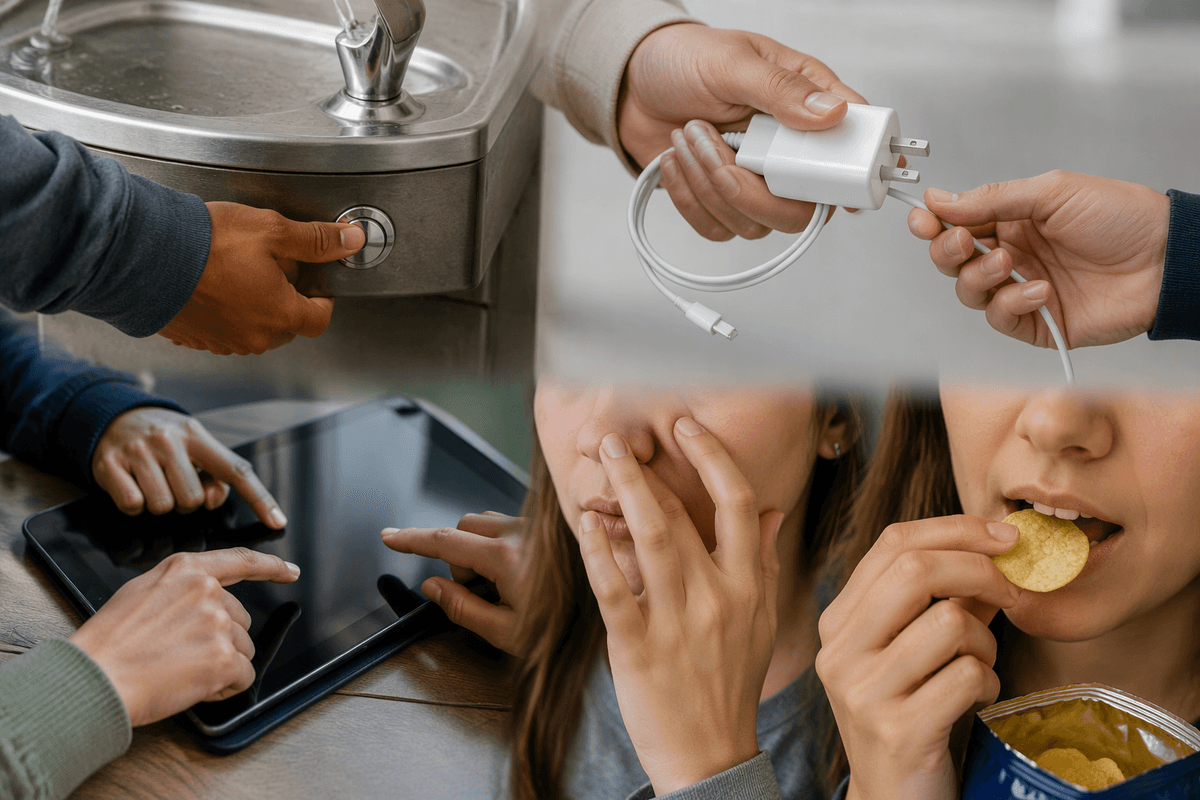
It often shows up as something you barely notice: sticky fingers on the car door handle, a quick wipe of a runny nose with the back of a hand, then the same hand grabbing a granola bar. In a busy day, the “handoff points” aren’t dramatic. They’re the small in-between moments—lining up at the water fountain, borrowing a charger, tapping a shared tablet, trading seats in the pickup line—where hands bounce from surfaces to faces and then to food.
Air is the other pathway people underestimate because you can’t see it. Crowded indoor rooms, loud talking, and practice in a packed gym can mean more breathing and closer spacing at the exact time kids are tired and less careful. The tricky part is uncertainty: the object you’re tempted to blame may not matter as much as the repeated mix of shared air, hand-to-mouth habits, and a rushed snack eaten without a pause.
Hand hygiene choices that families actually sustain
Sometimes the “handwashing problem” is really a timing problem: everyone is moving, someone is hungry, and the sink is suddenly far away. That’s when good intentions turn into a quick rinse, or a dab of soap that never makes it to the fingertips. And when kids hear “wash your hands” all day, it can start to feel like background noise—especially if their hands are dry, cracked, or stinging from frequent cleaning.
What tends to hold up for families is not perfect technique, but a few repeatable hand moments that match real life: before eating in the car, after the bathroom, after practice, and when you walk in the door. Those are the points where hands most often jump to mouths, snacks, or shared items. Sanitizer can be a useful bridge when there’s no sink, but it’s also easy to overuse if it becomes a reflex for every touch. The goal is fewer, higher-impact resets—not constant policing.
Lunches, bottles, and backpacks as contamination hubs
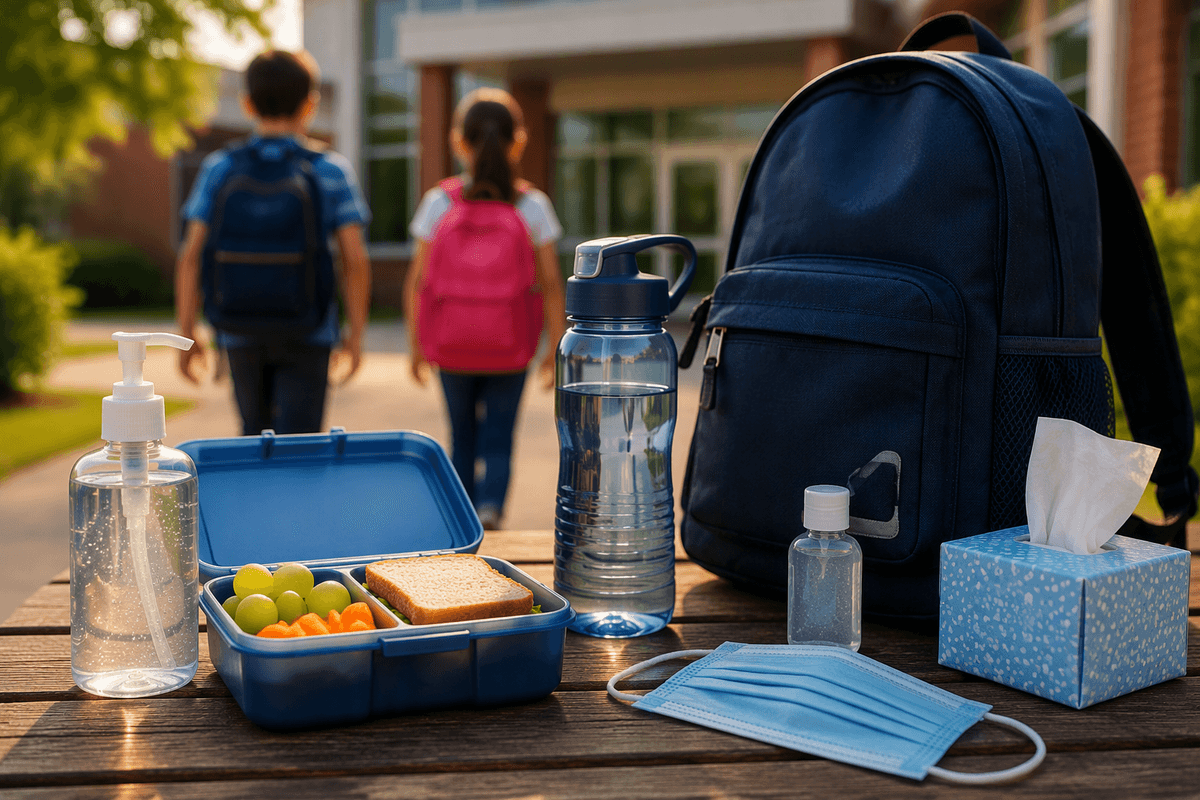
You can usually tell by the smell when the backpack hits the kitchen floor—warm plastic, crumbs, a faint milk note—and it’s a small clue that school stuff has been marinating all day. Lunch boxes and water bottles are less about “germs everywhere” and more about timing: hands that just touched desks and playground rails go straight to a sandwich, a straw, a bottle cap. If a child takes a sip, sets the bottle on a shared table, then twists the lid with the same fingers later, it can feel like the day keeps circling back to the mouth.
These items look personal, so they get handled casually by adults and kids alike. But they also travel: backpack straps get grabbed during lining up, bottles get swapped “just for a second,” and lunch containers get opened on buses, bleachers, and classroom floors. It’s inconsistent—some days nothing happens, and other days one sticky zipper or damp sponge can keep the whole routine feeling off.
Indoor air and crowds: prevention beyond surfaces
It’s easy to feel reassured when a desk looks clean, then watch your child step off the bus sounding hoarse anyway. That’s often the moment parents realize the “gross” part of school isn’t always what’s on hands—it’s the shared air during the parts of the day that pack kids together. A loud classroom discussion, a crowded music room, a bus ride with windows sealed, or a post-school program in one small room can mean more close-range breathing right when kids are talking, laughing, and leaning in.
One week, nothing spreads; the next, a mild sniffle seems to move through a table group, then shows up at home after dinner. In those settings, wiping a backpack strap can feel satisfying but miss the bigger handoff: the same air being shared for long stretches, especially when kids are tired, forgetful, and rubbing their eyes without noticing.
When extra cleaning backfires with irritation or anxiety
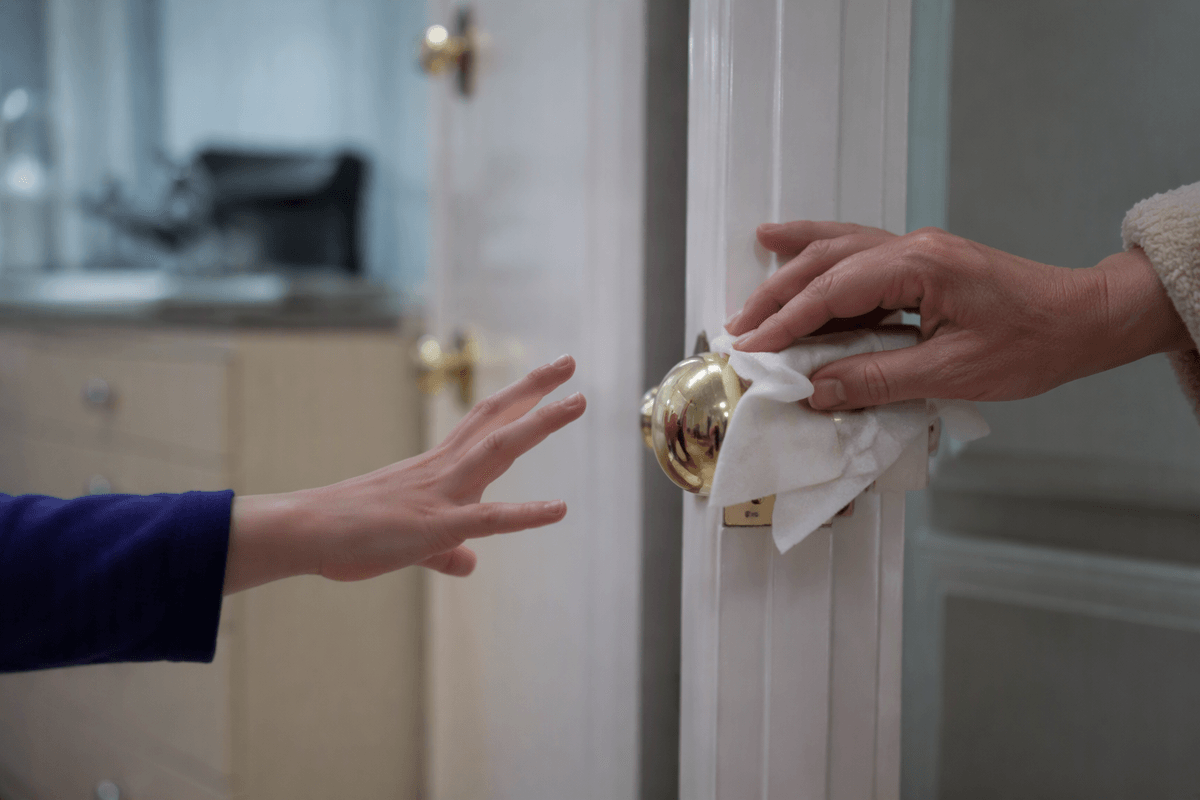
It can start with good intentions and a small sting: your child’s hands look “clean,” but they’re red around the knuckles, and they flinch when soap hits a tiny crack. That’s usually when cleaning stops feeling like prevention and starts feeling like a battle. Some families respond by washing more, scrubbing harder, adding stronger sprays—only to find the irritation makes kids avoid the sink, rush through it, or wipe their nose with the back of a sore hand. The routine gets louder, not healthier.
Anxiety can creep in the same way. If every doorknob feels risky, you end up chasing the last touch instead of the main handoffs. The tricky truth is that “more” doesn’t always equal “better,” especially when shared air and tired habits are doing a lot of the work. When cleaning becomes constant, it can crowd out the few resets that actually fit into mornings and snack time, and everyone feels like they’re failing at something invisible.
Building a family plan for uncertain sick days
It often hits at the most inconvenient time: a kid stands in the hallway with damp hair, saying their throat “feels weird,” and you’re trying to decide whether it’s nerves, allergies, or the start of something. That uncertainty is what makes sick days so disruptive—plans get made on the fly, siblings drift closer to “help,” and everyone keeps sharing the same car seats, remotes, and snack bowls while you wait for the picture to sharpen.
A workable family plan usually looks less like a rulebook and more like a few pre-decisions you don’t have to renegotiate each time: which symptoms mean staying home, who can cover pickup, where the “rest spot” is, and what gets separated first (water bottles, towels, phones on pillows). It won’t be perfectly consistent—some fevers fade, some coughs linger—but having a default reduces the frantic guesswork that tends to create extra handoffs when you’re already tired.

![Best Cash Alternatives [Get Yield on Short-Term Investments]](static/image/2026/08/03/87e885cb-e070-4bb6-902b-704f3bb1fb84.png)