TrekCommerce

Travel

Kyoto in Late November

Autumn colour peaks unpredictably, but temple hours, market days and night openings follow a schedule you can plan around.

Pamela Andrew

Late November brings the year's heaviest crowds to Kyoto, drawn by a colour peak that moves by a week or two depending on the season. What you can plan around is everything else: temples open early, most close between four and five, and a handful run evening illuminations that require separate tickets. Build the trip on hours, not on leaves.

Plan by opening hours, not by forecast

Most temples open between eight and nine in the morning and shut in the late afternoon, so a realistic day holds three sites rather than six. Arrive at the first before opening, because the first hour is quiet everywhere and the difference is larger than any ticket upgrade. Book illuminations in advance, as evening slots sell out first.

Keep one day free of temples entirely. Markets, the riverside paths and the older shopping streets operate on their own rhythm and absorb crowds far better. Mid-trip, a day without a checklist is what makes the following morning's early start possible, and the colour looks better when you are not racing a closing gate.

Suburban sites and central sites trade differently

Compare a famous central temple against a suburban one reached by a twenty-minute train. The central site offers convenience and a queue that can exceed an hour; the suburban site costs travel time and often gives you a garden with a dozen other people in it. On a five-day trip, mixing both is more satisfying than choosing one approach.

Practical move: buy a stored-value transit card at the airport and use buses sparingly, since November traffic makes them slow. Trains and the subway are reliable and the walk from each station is usually part of the appeal. Check whether your chosen site closes on a specific weekday, as several do.

The colour forecast is not a booking tool
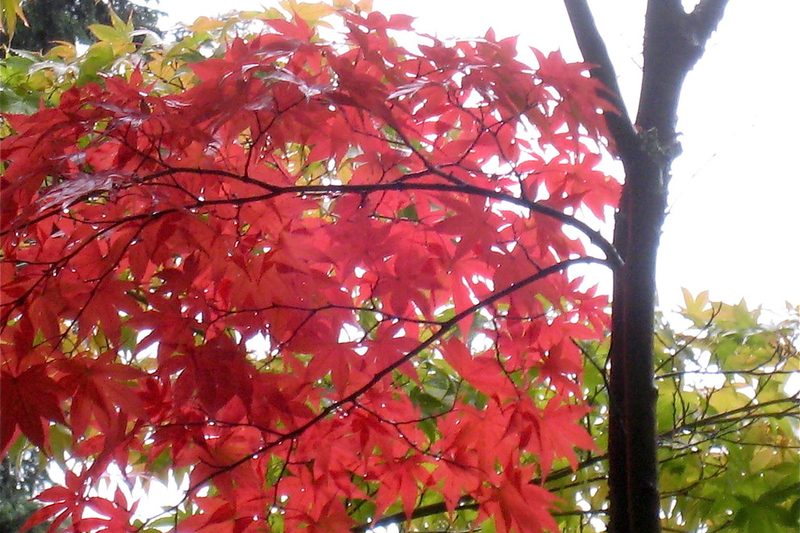
Stone steps leading to a temple gate framed by maples

Published colour forecasts are useful for expectations and poor for scheduling, because they shift as the season develops. Booking non-refundable travel around a projected peak is a gamble. Choose your dates for cheaper fares and thinner weekday crowds, then treat whatever colour appears as a bonus rather than a guarantee.

Keep reading

Related Reads

European Rail: Which Reservations Matter

Travel

European Rail: Which Reservations Matter

A rail pass covers the fare. It does not guarantee a seat, and the difference matters most on four specific routes.

One-Bag Packing for Wet Climates

Travel

One-Bag Packing for Wet Climates

Rain changes what you carry far more than cold does. Three decisions cover most of it.

Long Layovers: When to Leave the Airport

Travel

Long Layovers: When to Leave the Airport

A nine-hour stop can be a bonus day or an expensive mistake. Four hours of usable time is the threshold.

Coastal Portugal by Bus Beats Driving

Travel

Coastal Portugal by Bus Beats Driving

Parking, tolls and one-way streets turn a scenic drive into a chore. The intercity coach does most of it better.

Picking a Safari Base: Water, Distance, Dawn

Travel

Picking a Safari Base: Water, Distance, Dawn

The camp you choose decides your game drives more than the park's reputation does. Three variables do the work.

Taipei in 72 Hours

Travel

Taipei in 72 Hours

Three days is enough if you treat the city as two halves: a flat, dense basin and the volcanic hills behind it.

Iceland's South Coast: Renting vs. Guided Days

Travel

Iceland's South Coast: Renting vs. Guided Days

Self-driving costs less per day and more per mistake. Where the line falls depends on your winter dates.

Nepal Foothills Without a Fixed Schedule

Travel

Nepal Foothills Without a Fixed Schedule

Permits are fixed, lodges are not. Leave two flex days and a trekking route stops being an endurance test.

Cheap Flights, Costly Airports, Real Cost

Travel

Cheap Flights, Costly Airports, Real Cost

The ticket price and the door-to-door cost can differ by more than the flight itself. Four lines decide which.

Overnight Ferries: Book Early

Travel

Overnight Ferries: Book Early

An overnight crossing replaces a hotel night. The cheap berths go first, and the deck seats are not a plan B.

Desert Travel: Water, Shade and Timing

Travel

Desert Travel: Water, Shade and Timing

Nothing in a desert is difficult except the schedule. Move the day around the heat and the rest becomes straightforward.

Small Museums in Big Cities: Half-Day Plans

Travel

Small Museums in Big Cities: Half-Day Plans

Two hours in a specialist collection beats four in a crowded flagship. The trick is choosing on subject, not status.